
Americans - Regional Biography, United States History - Northeastern & Middle Atlantic Region, Women's Biography, Family Memoirs - Biography, Women's Biography
Log in to track your reading progress.
Overview
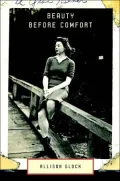
""The first lesson [my grandmother] ever taught me was that dancing matters... When she did come across men she fancied who didn't dance, she sent them away until they did. They always learned, because my grandmother was bitingly beautiful, and that is the second lesson she taught me - that beauty inspires, all of God's beauty, but especially hers."" "So writes Allison Glock at the start of her memoir of her maternal grandmother, Aneita Jean Blair, a woman who came of age during the Depression in a West Virginia factory town yet refused to succumb to the desperation that surrounded her. Instead, Aneita Jean rouged her cheeks and kicked up her heels and did her best to forget the realities of life in an insular community where your neighbors could be as unforgiving as the Appalachian landscape. Before it was all over, Aneita Jean would have seven marriage proposals and her share of the tragedies that befall small-town girls with bushels of suitors and bodies like Miss America, girls "who dare to see past the dusty perimeters of their lives."" Glock travels back through time, assisted by a fistful of old photos and the piercing childhood memories of her grandmother, "a skinny, eager child with disobedient hair and bottomless longing." Together they guide us through the cramped dankness of the pottery plants, the dense sweetness of the holler, and into the surging promise of the Ohio River, capturing not only the irrepressible vitality of Aneita Jean Blair, but also the rich ambiance of working-class West Virginia during the twenties, the Great Depression, and World War II.Editorials
From Barnes & Noble
Barnes & Noble Discover Great New Writers"Everyone has a story to tell," Allison Glock states in her publishing debut, Beauty Before Comfort, the unique and heartwarming history of her grandmother, Aneita Jean Blair. As Glock tells it, Aneita Jean was an impulsive and lively young beauty, attracting boys long before she understood why. Born in 1920 in a working-class town in West Virginia, Aneita Jean had plans to leave her humble beginnings behind, refusing to be defined by the pottery produced in her factory town. Where did she want to go? "To a place where all the women lolled about, resplendent in chiffon and diamonds," Glock writes. "Someplace glamorous. Like Pittsburgh."
Glock concentrates on Aneita Jean's youth, but she also treats readers to glimpses of the irrepressible older woman she would become and fondly remembers her grandmother as "crazy in the same way that all women are who are born in a town too small for their wild fever."
Mingling fascinating bits of history from the Depression and World War II eras with humorous and affectionate descriptions, Glock offers a memoir that's distinctive in detail but universal in appeal. While it may be true that everyone has a story to tell, not everyone has a storyteller as capable, clever, and insightful as Aneita Jean's granddaughter, Allison. (Summer 2003 Selection)
The Los Angeles Times
For there's more to this memoir than a celebration of one woman's narcissism. It is also a vivid evocation of the imperiled natural beauty of this region of mines and potteries, the hardships of the Depression and the charms of small-town life as well as its shibboleths, petty snobberies and sheer boredom. Glock writes with enormous zest, and her book is a delight to read: funny, forceful, down-to-earth. Her humor comes straight out of the classic American vein, a blend of tall-tale hyperbole and ironic understatement. — Merle RubinThe New York Times
Aneita Jean's story, of course, varies only in its particulars from who knows how many other tales of beauty and talent blooming furiously in some American backwater, witnessed only by people who, possessing no other resources, grind it up to ameliorate their own anonymous hungers. We mistake the tale of the starlet discovered in the drugstore as the archetypal American story, when it's the story, most often untold, of the beauty who goes undiscovered, the voice that goes unheard, that comes closer to getting right who we actually are. Aneita Jean proved to be lucky after all in that her lifelong howl of longing and dissatisfaction was heard and taken to heart by a writer of uncommon generosity. Aneita Jean Blair Thornberry is beautiful. And she looks just like somebody we know. — Tony EarleyPublishers Weekly
In West Virginia hillbilly country during the 1930s and '40s, Aneita Jean Blair was a "slinky redhead with a knowing smile" and a Miss America figure. She was shamelessly provocative, relentlessly freeloving and determined to get the hell out of depressed Hancock County. She also had a stinging wit and a storehouse of aphorisms ("beauty before comfort" was one). Although her life turned out to be far narrower than her aspirations, Aneita Jean was lucky in having a granddaughter, the author of this memoir, who has conveyed her flamboyant personality and memorialized the strings of beaux she ran through, the chic clothes she wore and the tragedies she surmounted. While the narrative initially grabs the reader with bold and brassy anecdotes, when Glock segues into the history of the Blair family, the tension declines. The story is sometimes poignant, sometimes predictable and sometimes far-fetched. While some of her reconstructed family tales run thin, Glock does not honey coat her grandmother's character. Not every granddaughter would write, "she had given in entirely to her shallowest instincts and run whole hog into the bliss of debauchery." As a social history the memoir fascinates. Because of the clay on the shores of the Ohio River, pottery factories were established there in the 1850s, and they became the family trade. Descriptions of factory jobs, the brutal working conditions and the chronic diseases they caused (including rampant alcoholism) are valuable indices of our national history. The account's candor and Glock's gift for juicy metaphors ("Puberty hit my grandmother like a dropped piano") add memorable touches to an offbeat story. 20 photos. Agent, Sarah Chalfant. (May 6) Copyright 2003 Reed Business Information.Library Journal
Glock, a writer-at-large for GQ, makes her book debut with this memoir of her maternal grandmother, Aneita Jean Blair (1920-92). Drawing on Blair's stories as well as family photographs, Glock portrays the harsh environment of her grandmother's longtime home, Chester, WV, a pottery factory town sandwiched between the Appalachian Mountains and the Ohio River. It was a hard life, with alcohol as solace. While Glock offers fine descriptions of small-town, working-class life during the first half of the 20th century-paying particular attention to the Great Depression and World War II-this is more an insightful portrait of a woman who struggled and survived. A classic beauty, Blair was difficult, and Glock takes pains to re-create her relationships with her family, girlfriends, many boyfriends, and husband, Don. Blair's sexuality, in fact, drives many of the anecdotes. The early death of her brother, Pete, is also poignantly recounted, as is the senility and death of her husband. Recommended for public libraries.-Gene Shaw, NYPL Copyright 2003 Reed Business Information.Kirkus Reviews
Glock debuts with a lovely, blue memoir of her maternal grandmother, a vital square peg in the poor, round hole of a hard-baked West Virginia town. Writing with the rhythmically punctuated cadence of one semi-lost in thought as she conjures images, the author tells the story of both Aneita Jean Blair and the town of Chester, West Virginia, during the first half of the 20th century. Despite its green hills, wildflowers, and pockets of loveliness, its clean clay that drove the pottery mills, Chester had its full share of sordidness, squabbles, potter's lung, lead poisoning, backstabbing, and the grind of just making do. In this working-poor company town, Blair knew she was made of choicer stuff. She was a sparkplug who "spent at least seventy of her eighty-two years cultivating stares and making damn sure she has warranted the attention." Dancing mattered, beauty inspired ("a woman who didn't bother to make the most of what God gave her was displaying a lack of fortitude"), baking a cake was important, but so was telling a joke and knowing how to smoke a cigarette in a bus-stop ladies' room: style made this woman. It's not much of a surprise that "puberty hit my grandmother like a dropped piano," or that at 13 she attracted men like iron filings to a magnet. Her stern Scotch father was apoplectic, her mother was gentle, her brother Petey was her rock. "While her girlfriends were frantically honing in on potential mates, Aneita Jean spun the revolving door off its hinges"; again, it's no surprise when the author warns, "sooner or later, everyone is in for a world of hurt." Petey died young, Blair married a man who would never leave town, and her beauty paled: "it made her nastier, and itmade her funnier," qualities that drew her granddaughter to her with the same ardor as those men so many years before. A memoir as elemental as its subject: pulsing, fetching, leaving a strong afterglow. (20 photos)Book Details
Published
April 1, 2003
Publisher
Alfred A. Knopf
Pages
208
Format
Hardcover
ISBN
9780375401213