
Southeastern States - Regional Biography, North American Folklore & Mythology, African Americans - General & Miscellaneous, Virginia & West Virginia - Regional Biography, African Americans - Folklore & Mythology, African American General Biography
Available on Bookshop
Write a review
Books.org participates in affiliate programs including Bookshop.org and the Amazon Services LLC Associates Program. We may earn a commission from qualifying purchases made through links on this page, at no additional cost to you.
Log in to track your reading progress.
Overview
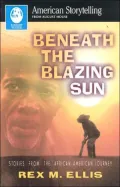
From African roots to the present day, scholar and storyteller Rex Ellis animates the African-American experience, weaving the strands of African folklore, early American history, and contemporary interpretations into a rich quilt. His stories spin a thread from the Windward Coast of West Africa to the shores of Jamestown and beyond. He uses storytelling as both a historical teaching tool and a method for dealing with controversial subjects. Ellis's unique style of storytelling educates, informs, ....
Editorials
VOYA -
Ellis is a storyteller currently based at the Smithsonian. "The stories in this book," he writes, "represent my growth and my attempt to grapple with being black in America." Through traditional tales and accounts of historical events and personal incidents, he reflects on the African-American experience since the slave trade. This is an ambitious undertaking, and not entirely successful. For an accomplished storyteller, Ellis's style is surprisingly awkward and occasionally (presumably unintentionally) funny: "The experience of enslaved Africans as they made the journey across the Atlantic Ocean... was one of great upheaval." His stories lack dramatic tension and the smooth arc one expects from an experienced performer. This book comes alive, however, in the autobiographical portions. Young readers will identify with Ellis's account of the perils of growing up, trying to telephone girls, and losing his basketball skills when his archrival Sharon develops distracting curves. His description of taking his future wife to the drive-in movie is alone worth the price of the book. The very universality of his experiences makes the understated limitations of growing up in the segregated sixties all the more affecting. His is not an angry voice, but it is a convincing one. For polished language and style, look to Virginia Hamilton's The People Could Fly (Random, 1987) or Many Thousand Gone (Knopf, 1993). This book's appeal is in Ellis's personal accounts and his heartfelt desire to make his people's experience accessible. Savvy teachers will find portions of it great read-aloud material. VOYA Codes: 3Q 2P M J S (Readable without serious defects, For the YA with a special interest in the subject, Middle School-defined as grades 6 to 8, Junior High-defined as grades 7 to 9 and Senior High-defined as grades 10 to 12).School Library Journal
Gr 6-9This collection of 18 short stories and 2 poems traces the African-American experience from pre-slavery times in Africa through life in the United States today. The selections touch on all major aspects of the experience, including capture and travel on slave ships, life as a slave, emancipation, and the civil rights struggle. Ellis is a storyteller, and while the stories may work in an oral setting, something is lost on the printed page. He breaks the cardinal rule, "Show, don't tell," leaving readers uninvolved and the stories flat and unsatisfying. The one exception to this is "Daddy and the Black Barnstormers," a history of African Americans in aviation, which reads as an interesting essay rather than as a short story. Most libraries should stick with books such as Virginia Hamilton's The People Could Fly (1985) and Many Thousand Gone (1993, both Knopf) and works by the McKissacks.Yapha Nussbaum Mason, Brentwood Lower School, Los AngelesBook Details
Published
May 1, 1997
Publisher
Little Rock, Ark. : August House Publishers, c1997.
Pages
176
Format
Paperback
ISBN
9780874834888