
Social Science
Available on Bookshop
Available on Amazon
Write a review
Books.org participates in affiliate programs including Bookshop.org and the Amazon Services LLC Associates Program. We may earn a commission from qualifying purchases made through links on this page, at no additional cost to you.
Log in to track your reading progress.
Overview
... Frankenstein stories would include, at minimum, the films Flesh for Frankenstein (dir. Paul Morrissey, 1973) and Frankenstein: The True Story (dir. Jack Smight, 1973), which are associated, respectively, with Andy Warhol and Christo ...Synopsis
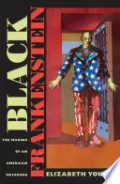
For all the scholarship devoted to Mary Shelley's English novel Frankenstein, there has been surprisingly little attention paid to its role in American culture, and virtually none to its racial resonances in the United States. In Black Frankenstein, Elizabeth Young identifies and interprets the figure of a black American Frankenstein monster as it appears with surprising frequency throughout nineteenth- and twentieth-century U.S. culture, in fiction, film, essays, oratory, painting, and other media, and in works by both whites and African Americans. Black Frankenstein stories, Young argues, effect four kinds of racial critique: they humanize the slave; they explain, if not justify, black violence; they condemn the slaveowner; and they expose the instability of white power. The black Frankenstein's monster has served as a powerful metaphor for reinforcing racial hierarchy—and as an even more powerful metaphor for shaping anti-racist critique. Illuminating the power of parody and reappropriation, Black Frankenstein tells the story of a metaphor that continues to matter to literature, culture, aesthetics, and politics.Book Details
Published
August 10, 2008
Publisher
NYU Press
Pages
320
ISBN
9780814797150