
Apologetics (Christian), Christianity - General & Miscellaneous, Christianity - Comparative Studies, General & Miscellaneous Religious Philosophy
Log in to track your reading progress.
Overview
Not everyone has a religion, but everyone has a worldview--that core set of beliefs through which you interpret your world. From music and media to professors and peers, you're exposed to different worldviews every day, and usually not from a biblical perspective. So how can you engage others in meaningful conversation if you don't know where they're coming from? Forget the doctorate-level jargon. Discussing worldviews doesn't have to be intimidating. This user-friendly book will help you understand where others are coming from whether they embrace the Haunted worldview, Dueling Yodas, Omnipresent Supergalactic Oneness, WYSIWYG, or Designer Religion. Discover what these terms mean and how their worldview messages have crept into today's culture. You'll become a more confident, effective Christian representative in this increasingly pluralistic world. Includes a foreword from Charlie Lowell of Jars of Clay.Editorials
Donna Eggett
"Written to attract the young adult, Blah, Blah, Blah has much in it that will help Christians trying to survive in today’s society. This book caught my interest, giving me a great deal of food for thought, along with clear instructions and suggestions for immediate implementation."—Christian Book Previews.com
Marvin Olasky
Bayard Taylor's Blah, Blah, Blah: Making Sense of the World's Spiritual Chatter (Bethany House, 2006) is deliberately lightweight, an easy-to-read apologetic that might break through to high-school and college students resistant to theological terminology.— World
Kate E. Schmelzer
If you're like most Christians, you've often wondered how Christianity compares to other ways of understanding both the spiritual and physical world. Now you can find out in Blah, Blah, Blah: Making Sense of the World's Spiritual Chatter. With a style that's clear and understandable, author Bayard Taylor shows how biblical Christianity is uniquely different from Animism, Naturalism, Cosmic Dualism, Pantheism, and Relativism. Along with discovering how Christianity compares to other world views, you'll also learn how your own religious worldview is affected by television, movies, music, and what you're taught in school. (Kate E. Schmelzer, Campus Life)Children's Literature
Bayard Taylor, a teacher of high school, college, home schooling, and parenting groups, presents guides for conversations Christians may have with persons of differing religious views. By identifying the beliefs held by others, Taylor guides the reader to effective tools for conversing about religion with the wide variety of people encountered on life's highway, not with an aim of conversion or agreement but of an understanding of differences and becoming "a more confident and effective public representative of Christian faith." Among the world views discussed are paganism, Biblical, experiential, and Designer Religions like Scientology designed by individuals to meet their particular needs. Hopefully the suggestions Taylor makes will not become just one more "Blah, Blah, Blah" but will rather enable young Christians to be comfortable and confident in discussions of their faith. Occasionally suggestions slide into commands (like "one of the important skills I want you to take from this book) but usually the advice is practical, effective, and within the reach of a young Christian.VOYA
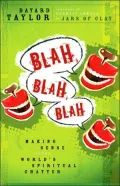
In his well-intentioned research tool meant to assist Christian high school and college students in clarifying their worldview before heading into the big, bad world, Taylor defines six categories of worldviews: Haunted (animism and pantheism); Biblical (Judeo-Christian); What You See Is What You Get (naturalism, materialism, and agnosticism); Dueling Yodas (battle between good and evil forces); Omnipresent Galactic Oneness (everything is one and all is God); and Designer Religion (pick and choose what to believe according to the fad of the day-"any way to God is cool"). One chapter focusing on Christianity provides insights on the differences between core beliefs, traditions, and opinions whereas another chapter illustrates overlaps between competing belief systems. The information could be valuable for teens with the time to read through it and check out the Web sites included in the chapter notes. Those who prefer a more plainspoken resource might try So What's the Difference? (Ridenour, 2001), which offers the history, main beliefs of major and obscure religions, and summarizes the differences between each of them and basic Christianity. Sadly those who need to shore up their confidence in order to articulate and defend their faith may pass by this book. A sometimes dry writing style does not always match the cleverness of the chapter and sub-chapter titles. The poorly chosen title and ugly cover art featuring a trio of smiling wind-up plastic mouths may cause readers to visualize Charlie Brown's teacher droning on and on rather than a potentially useful resource.Book Details
Published
May 28, 2006
Publisher
Minneapolis, Minn. : Bethany House, c2006.
Pages
251
Format
Paperback
ISBN
9780764201875