
General & Miscellaneous Russian Literature - Literary Criticism
Available on Bookshop
Write a review
Books.org participates in affiliate programs including Bookshop.org and the Amazon Services LLC Associates Program. We may earn a commission from qualifying purchases made through links on this page, at no additional cost to you.
Log in to track your reading progress.
Overview
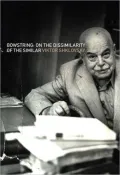
“Myths do not flow through the pipes of history,” writes Viktor Shklovsky, “they change and splinter, they contrast and refute one another. The similar turns out to be dissimilar.” Published in Moscow in 1970 and appearing in English translation for the first time, Bowstring is a seminal work, in which Shklovsky redefines estrangement (ostranenie) as a device of the literary comparatist—the “person out of place,” who has turned up in a period where he does not belong and who must search for meaning with a strained sensibility. As Shklovsky experiments with different genres, employing a technique of textual montage, he mixes autobiography, biography, memoir, history, and literary criticism in a book that boldly refutes mechanical repetition, mediocrity, and cultural parochialism in the name of art that dares to be different and innovative. Bowstring is a brilliant and provocative book that spares no one in its unapologetic project to free art from conventionality.Synopsis
Dalkey Archive Press’s favorite writer of them all.
“Myths do not flow through the pipes of history,” writes Viktor Shklovsky, “they change and splinter, they contrast and refute one another. The similar turns out to be dissimilar.” Published in Moscow in 1970 and appearing in English translation for the first time, Bowstring is a seminal work, in which Shklovsky redefines estrangement (ostranenie) as a device of the literary comparatist—the “person out of place,” who has turned up in a period where he does not belong and who must search for meaning with a strained sensibility. As Shklovsky experiments with different genres, employing a technique of textual montage, he mixes autobiography, biography, memoir, history, and literary criticism in a book that boldly refutes mechanical repetition, mediocrity, and cultural parochialism in the name of art that dares to be different and innovative. Bowstring is a brilliant and provocative book that spares no one in its unapologetic project to free art from conventionality.Editorials
Publishers Weekly
Available in English for the first time, this title, first published in 1970, is another impressive addition to the Shklovsky oeuvre. Shklovsky (1893–1984), a giant of Russian Formalism, (Theory of Prose), focuses on innovation in art—what it means and requires. To Shklovsky, an "innovator is a guide who changes the tracks but who also knows the old pathways," and he surveys history and the present moment to identify those crucial points where innovation occurs, when "the similar turns out to be dissimilar." He revisits and revises his concept of ostranenie (estrangement), contemplates the work of artists from Tolstoy to Stravinsky, examines the structures of myths and fairy tales. He also revives the work of such colleagues as Boris Eichenbaum and Yuri Tynjanov, so that the book becomes both an homage to and a collaboration with his friends and muses. His mind moves like a lasso, pulling literature, film, painting, architecture, music, and characters as diverse as Charlie Chaplin and Albert Einstein into his argument, so that the book becomes a place of reckoning and revision, crammed with life and a life's worth of thought. Shklovsky's prose is not strictly academic, nor is it immediately accessible. Like his previous books, it requires patience and surrender, and for thinkers and lovers of language, the devoted or the curious, the surrender is, once again, worth it. (July)Book Details
Published
July 7, 2011
Publisher
Dalkey Archive Press
Pages
456
Format
Paperback
ISBN
9781564784254