
Journalism - Technique, Participation & Pluralism in Democracies, Media - General & Miscellaneous, Media - Theory & Philosophy, Mass Media & Politics, Journalism - General & Miscellaneous
Log in to track your reading progress.
Overview
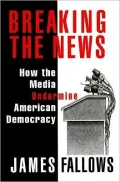
Polls show that Americans from every political, racial, and economic group in the country are mad at the media, but members of the press claim this simply proves that they are doing their job: reporting the news without fear or favor. As James Fallows demonstrates in this razor-sharp indictment, not only is the press not doing "the job," it is actually getting in the way of Americans doing their jobs as citizens. Fallows details the ways in which the current style of news coverage engenders a sense of futility in the American public with regard to its ability to influence our society. Drawing on his own richly varied experience as a reporter and on scores of interviews with members of the print and broadcast media, he reveals how the reigning destructive practices evolved, and whose interests they serve. Outside the urban centers of media power, Fallows finds a new public-spirited approach to news coverage that is gathering passionate adherents while meeting fierce resistance from the media old guard. Breaking the News will ignite the increasingly heated debate over the role of the American media.At last a persuasive explanation of what's gone wrong with the American media--and what can be done about it. Fallows details the ways in which the current style of news coverage engenders a sense of futility in the American public about our ability to influence our society. He reveals how the reigning practices evolved and whose interests are served. National ads/media.
Editorials
Publishers Weekly -
Fallows's rousing jeremiad is an important beacon for everyone concerned about the news media's poor performance in helping the public make sane choices about the way we live, work and govern. The Atlantic Monthly's Washington editor argues that growing bottom-line pressure-on newspapers struggling to survive, and on TV newscasters for ratings-has made reporting a cynical game increasingly dominated by image over substance and by overpaid star reporters. Domestic news coverage, instead of helping people to understand, cope with and even control events that affect them, focuses on scandal, spectacle and political squabbles. Reporters, says Fallows, display a strong if unconscious bias in favor of the rich and well-off over the have-nots. News coverage of international affairs, in his estimate, is riddled with projections of American concerns and assumptions. Fallows, himself a frequent guest on shows like Meet the Press and The NewsHour with Jim Lehrer, blasts TV talk shows and the lecture circuit, which, in his opinion, breed polarization and overstatement while trivializing the issues. He closes with a look at the ``public journalism'' movement, led by Wichita Eagle editor Davis Merritt and New York University communications scholar Jay Rosen, whose goal is to reconnect people to the public life of their communities. Buttressed by a wealth of examples, Fallows's points are well taken. First serial to Atlantic; author tour. (Jan.)Library Journal
How the media give us the truth, the whole truth, and nothing but the truthas they want us to see it.Mary Carroll
Expect fireworks in response to this penetrating critique of the media from Fallows, Washington editor of the "Atlantic Monthly" and a National Book Award recipient for "National Defense" (1981). Journalism, he argues, is the "main tool we have for keeping the world's events in perspective . . . the main source of agreed-upon facts we can use in public decisions," but Americans justifiably hate the media for arrogance, irresponsibility, and negativism. Fallows traces the financial, cultural, and political changes that have diminished the authority and "wholeness" of the American media and finds that instead of engaging the public in debate about vital issues, the media "entertain" people with celebrity journalism and badger them with news that the world is out of control or that they will always be governed by crooks or that their fellow citizens are about to kill them. Fallows characterizes the public reaction to this kind of news as a "strange motiveless irritability" that makes it difficult for citizens to face complicated challenges and competing ideas or even to "tolerate" politicians interested in doing more than winning elections. Analyzing coverage of health care reform to show how the media "get in the way" of democracy, Fallows endorses the public journalism movement as a first step in bringing journalism back to serving its fundamental purpose, that of "making democratic self-government possible." A timely, thoughtful study.Book Details
Published
April 1, 1996
Publisher
New York : Pantheon Books, c1996.
Pages
272
Format
Hardcover
ISBN
9780679442097