
Modernism - Literary Movements, English Fiction & Prose Literature - General & Miscellaneous - Literary Criticism, English Fiction & Prose Literature - 20th Century - Literary Criticism, English Fiction & Prose Literature - 19th Century - Literary Critici
Available on Bookshop
Write a review
Books.org participates in affiliate programs including Bookshop.org and the Amazon Services LLC Associates Program. We may earn a commission from qualifying purchases made through links on this page, at no additional cost to you.
Log in to track your reading progress.
Overview
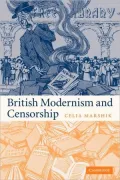
Government censorship had a profound impact on the development of canonical modernism and on the public images of modernist writers. In British Modernism and Censorship, Celia Marshik argues that censorship can benefit, as well as harm, writers and the works they create in response to it. She weaves together histories of official and unofficial censorship, of individual writers and their relationships to such censorship, and of British modernism. Throughout, Marshik draws on an extraordinary range of evidence, including the files of government agencies and social purity organizations. She analyzes how works were written, revised, published, and performed in relation to this complex web of social forces. Chapters on Dante Gabriel Rossetti, Bernard Shaw, Virginia Woolf, James Joyce, and Jean Rhys demonstrate that, by both reacting against and complying with the forces of repression, writers reaped personal and stylistic benefits for themselves and for society at large.Synopsis
Government censorship had a profound impact on the development of canonical modernism and on the public images of modernist writers. Celia Marshik argues that censorship can benefit as well as harm writers and the works they create in response to it. She weaves together histories of official and unofficial censorship, of individual writers and their relationships to such censorship and of British modernism. Throughout, Marshik draws on an extraordinary range of evidence, including the files of government agencies and social purity organisations. She analyses how works were written, revised, published and performed in relation to this complex web of social forces. Chapters of Dante Gabriel Rossetti, Bernard Shaw, Virginia Woolf, James Joyce and Jean Rhys demonstrate that by both reacting against and complying with the forces of repression, writers reaped personal and stylistic benefits for themselves and for society at large.Book Details
Published
February 1, 2009
Publisher
Cambridge University Press
Pages
272
Format
Paperback
ISBN
9780521101288