
Fiction - General & Miscellaneous, Poetry - Peoples, Places & Cultures
Log in to track your reading progress.
Overview
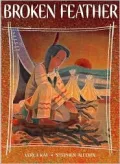
Broken Feather's homeland is a wonderful place. It's full of natural beauty, proud tribesmen, and fish just waiting to be caught. But then white men appear.At first they just pass through, but when they begin to clear land and build houses, even Broken Feather can tell trouble is brewing. It culminates in a battle the tribe loses, but even though they are forced onto a reservation, Broken Feather's pride in his heritage remains strong.
Inspired by the history of the Nez Percé tribe, Verla Kay's sensitive treatment of this difficult period is perfectly complemented by Stephen Alcorn's dramatic, stylized artwork. Both contributors have been highly praised:
Illustrations and simple, rhyming text portray the way of life of the Nez Percâe people, and how everything changed after the white men arrived, as seen through the eyes of a young girl, Broken Feather.
Editorials
School Library Journal
K-Gr 4-Through poetry, with young Broken Feather as the focus, Kay attempts to tell the history of the Nez Perc and their relations with white hunters, settlers, and, of course, the Army. However, not once in the text are people referred to by their tribal affiliation. They are always called Natives. Kay manages to get quite a bit of stereotyping into her minimal text as well ("Natives crouch-"; "Wise men chanting,/Tall, proud stance"; "Angry faces,/Stomping feet"). The illustrations, polychrome relief-block prints, demonstrate "my visions of his [Broken Feather's] fading world," as Alcorn writes in the illustrator's note. And the images are clearly a white person's idea of what an American Indian should look like. Feathers are in just about everyone's hair. In the end, readers are presented with the highly romanticized view of Broken Feather as an adult in a full feather headdress after the tribe has been forced onto a reservation. The Nez Perc were known for their skills as horsemen and that certainly would have fit in with the romanticized ideal of a Native American as portrayed in this book. However, none of the Native characters shown here have horses until they are defeated by the Army. For better picture books focusing on Native people, stick with books by Joseph Bruchac or Paul Goble.-S K Joiner, Brazoria County Library System, Angleton, TX Copyright 2002 Cahners Business Information.Kirkus Reviews
Although a beautiful combination of history and poetry, Kay’s (Tattered Sails, 2001, etc.) tale of displaced Native Americans will be difficult, for the traditional picture book audience to comprehend without knowledge of the Nez Percé Native tribe’s history. Flat, stylized illustrations, beautiful as they are, do little to bring the story into the realm of the young reader. Those familiar with the plight of the Nez Percé will find the clipped, rhyming text to be a poetic capsule of the historical plight of a people driven from their land and forced onto a reservation after defeated efforts to defend their homeland. Each word is filled with meaning and glistens in the context of the overall depiction of the era. ("Gold sun rising, / Horned lark sings. / Eagle soaring, / Spreading wings. / Bushes rustle, / Horses snort. / White men riding, / Far from fort.") Relief block prints surround the words with strong clean lines and restrained color. The prints are technically sophisticated and display superb craftsmanship. The art will attract many, but the major appeal will be for those with a firm grasp of the history of the Nez Percé. (author and illustrator notes) (Picture book/poetry. 6-10)Book Details
Published
October 1, 2002
Publisher
New York : G.P. Putnam's Sons, c2002.
Pages
32
Format
Hardcover
ISBN
9780399235504