
Legends, Myths & Fables - General & Miscellaneous, Fiction - Asian People, Places & Cultures, Fiction - Religion & Beliefs, Fiction - General & Miscellaneous, Fiction - Schools & Friendship, Fiction - Family Life
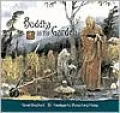
Log in to track your reading progress.
Synopsis
In this radiant retelling of an ancient legend, a small boy left at the gates of a Buddhist temple is adopted by the monks who live there. While the monks travel the world seeking enlightenment, the boy tends the temple garden. He befriends a blind monk who sits by the garden gate, too old to travel. One day the old monk tells the boy, "Buddha is in the garden!" and the boy, rapt with the prospect, runs through the gate. Buddha, however, is nowhere to be seen; instead, the boy finds an injured animal. This happens three times, and each time the boy finds a different creature to care for. In the moving conclusion, the boy discovers the true nature of enlightenment, to the surprise of the monks returning from abroad. Bouchard and Zhong-Yang have composed a classic and beautiful tale-the fourth in the award-winning Chinese Legends series.Editorials
Publishers Weekly
In Bouchard's (previously teamed with Huang for If You're Not From the Prairies) spare, eloquently told story, a young orphan finds enlightenment with the help of a blind monk. Unlike the elder monks who travel in search of enlightenment, the unnamed boy, whom the monks raise and care for but refuse to train, must remain at home, assigned the role of gardener. The blind monk who stations himself at the monastery door tells the boy, "Buddha is in the garden!" There, amongst the flowering trees, the boy experiences prophetic visions of the mother who left him at the temple gate. With the help of his blind companion, the young gardener realizes that he is finding enlightenment in the very environment he tends. A sense of peace and tranquility washes over the boy's face and physique in Huang's serene landscapes. The artist spent time at a Buddhist monastery in preparation for the story, and his bleached watercolors convey the feel of the arid air of the Asian mountains, lingering on the rough robes of the monks and their weathered skin. Of as much interest to adults as it will be to thoughtful children, the tale promises that enlightenment is waiting for any who wish to seek it right there in our own gardens. Ages 6-up. (Oct.) Copyright 2001 Cahners Business Information.Children's Literature
The four Buddhist signs of enlightenment, hunger, sickness, death and seeking enlightenment are the basis for this story, which is a marvelously successful collaboration between the writer and the artist. The temple monks find a baby boy lying next to a root peony at the gates. They take him into the temple, raise him and make him the temple garden boy. The monks travel the world seeking enlightenment, leaving only the garden boy and an elderly blind monk at the temple. The boy has never heard the monk speak to anyone so he is startled when he hears him say the words, "Buddha is in the garden!" The boy does not find Buddha when he goes to the garden, but a dream woman appears to him and when he opens his eyes, he finds a starving kitten and he cares for it as the monks cared for him. Three times he is spoken to by the blind monk, and each time he discovers a sign of enlightenment, until finally he finds peace. The magnificent paintings complement the text perfectly and together they capture that sense of peace and beauty. The book, which is part of the "Chinese Legends" series, will appeal to a more mature audience, making it a lovely story to read with a child. 2001, Raincoast Books, $15.95. Ages 7 to 10. Reviewer:Carolyn Mott FordSchool Library Journal
Gr 2-5-Atmospheric and evocative watercolors enhance this legend of the garden boy at a Buddhist monastery. Abandoned as an infant, the child has been raised grudgingly by the monks, whose true task is enlightenment. They assign him gardening duties because he was found with a peony. One day, when the boy is working alone, except for an aged blind monk who sits silent at the entrance, he hears a voice-"Buddha is in the garden!" He questions the old man who says nothing else. After searching the garden and finding nothing out of the ordinary, the boy sits to rest and begins to dream-of his mother, sick, alone, and struggling to protect a tightly held bundle: the child. And so begins his quest for enlightenment. Thoughtful and gently didactic, the tale points out that enlightenment may be found in concerned actions rather than more explicitly spiritual quests. Especially observant readers will wonder why the monks show so little concern for the boy and so much for their own pursuits. For many children, to be sure, the book will be an introduction to another culture and religion as well as to such concepts as enlightenment and reincarnation. As such, it may require additional explanation, but the boy's yearning for his mother and his regard for animals should strike a chord, as should the lovingly detailed paintings, most of which span a full 9"x16" inches.-Coop Renner, Moreno Elementary School, El Paso, TX Copyright 2001 Cahners Business Information.Book Details
Published
May 1, 2002
Publisher
Raincoast Books
Pages
32
Format
Hardcover
ISBN
9781551924526