
September 11th Terrorist Attacks, 2001, Business History - General & Miscellaneous
Log in to track your reading progress.
Overview
Central banks and stock exchanges are bombed. Suicide bombers ravage cinemas, nightclubs, and theaters. Planes crash into skyscrapers and government buildings. Multiple bombs explode on commuter trains. Thousands of people are killed and injured while millions are terrorized by these attacks.These scenarios could be part of a future Hollywood movie. Sadly, they are representative of previous terror attacks against industry and government interests worldwide. Moreover, they are harbingers of global terror threats.
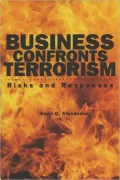
Industry constitutes a prime target of contemporary terrorism. This timely book analyzes the threats companies face due to terrorism, industry responses to these dangers, and terrorism’s effects on conducting business in the post-9/11 environment. Dean C. Alexander details the conventional and unconventional terror capabilities facing industry. He describes the activities of terrorists in the economic system and the ways they finance their operations.
Alexander discusses how companies can reduce terrorist threats and that corporate security can minimize political violence. He outlines the dynamics of the public-private partnership against terrorism: government aiding industry, business supporting government, and tensions between the two. He also delineates terrorism’s effects—financial, physical, and emotional—on workers and employers. He highlights the negative financial and economic consequences of terrorism. He discusses the impact of terrorism on traditional business practices and concludes with an assessment of future trends.
Synopsis
Alexander (a Washington, D.C. business consultant) explores the impact of terrorism on business operations and the role of business in aiding or combating terrorism. He offers chapters that explore products and services used in terrorism, different ways terrorism is financed, type of places targeted by terrorists, corporate security issues, public-private partnerships in combating terrorism, terrorism's effects on labor-management relations, and other topics. Annotation ©2004 Book News, Inc., Portland, OR
Book Details
Published
September 1, 2004
Publisher
University of Wisconsin Press
Pages
246
Format
Hardcover
ISBN
9780299189303