
Teen Fiction - Choices & Transitions, Fiction - Animals - Insects, Teen Fiction - Sports, Teen Fiction - Family & Relationships
Log in to track your reading progress.
Overview
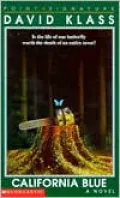
Teenager John Rodgers and his dying father find themselves on opposite sides of an environmental battlefield. At issue is a new species of blue butterflies that John discovers on a jog through land owned by the lumber mill that employs his father and most of his town. An ALA Recommended Book for Reluctant Readers and a School Library Journal Best Book of the Year.When seventeen-year-old John Rodgers discovers a new sub-species of butterfly which may necessitate closing the mill where his dying father works, they find themselves on opposite sides of the environmental conflict.
Editorials
Publishers Weekly -
In this beautifully rendered novel, Klass ( Wrestling with Honor ; A Different Season ) transforms an abstract environmental issue into a compelling story of a boy in transition from adolescence to adulthood. The book owes some of its success to how the author sidesteps dogmatism while still making clear his environmentalist point of view. The protagonist, John Rodgers, has to face three troubling facts. First, his father, with whom John has never really gotten along, has been diagnosed with leukemia and is likely to die soon. Second, John has discovered a new species of butterfly and wants to preserve it, but the butterfly lives on land owned by the local mill, and any governmental protection of the area will be bitterly resisted by the entire town, including John's parents. And finally, John has fallen in love with his high school biology teacher, who does not entirely rebuff his attentions. Klass handles these complex situations with grace and subtlety; an unusual and credible inclusion is Miss Merrill's honest acknowledgement to her student that she has strong feelings for him. The absorbing first-person narration rings true, projecting the credible voice of a teenager just beginning to break free from his emotional ties to home, family and friends. The fears, excitement, anger and energy of this awkward psychological time are movingly captured here. Ages 12-up. (Apr.)The ALAN Review -
In a northern California mill town, seventeen-year-old John Rodgers lives in the shadow of his athletic father, who, like many in the community, is a lumber-mill employee. After learning that his father has leukemia, John, a distance runner, goes for a run in the forest to sort out his feelings. In the process he discovers a new species of butterfly. He shares his find with Miss Merrill, his attractive biology teacher, who provides an intellectual model for him but who is also someone he regards romantically. Her former professor confirms the California Blue, leading to a clash between environmentalists and the townspeople, and, in particular, between John and his father. In the aftermath of the confrontation, John's father for the first time comes to watch John run in a meet, and the two are drawn closer as each gains important insights about the other. By the end of the book, the environmental issue is still not resolved, but readers may assume that a reasonable compromise will occur. Klass tells a good story with a viable theme that will interest high-school readers.School Library Journal
Gr 8 UpA 17-year-old loner with a passion for nature discovers a new species of butterfly in the old-growth forest near his home and is thrust headlong into the battle between environmentalists and the timber industry. A gripping story of a young man holding on to personal convictions in spite of family and community pressure. (April 1994)Mary Harris Veeder
John Rodgers lives in a northern California logging town, but the redwoods he runs through mean more to him than a livelihood. At 17, he cares about track and butterflies, although neither pursuit is understood by his family. His father's recently diagnosed cancer occupies the family, and John, a loner who is shy around girls, dreams about his biology teacher, Miss Merrill. When the unusual chrysalis John finds turns out to be an unknown species, everything is called into question, from his father's job to his relationship to Miss Merrill. The "inner game" of running and the fear John's strong father has of dying are both handled well, and Klass' exploration of the human cost of environmental action suggests that there are alternatives to the simplistic "butterfly vs. logging jobs" model.Book Details
Published
April 1, 1996
Publisher
Scholastic
Pages
208
Format
Paperbound
ISBN
9780590466899