
Asian Studies - South Asia - India, Human Rights, Indian Law, Socio-Cultural Anthropology - General & Miscellaneous
Log in to track your reading progress.
Overview
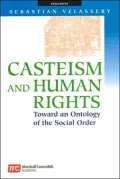
This book seeks to understand the contextual nature of casteism, its bearing upon the issue of human rights, its dynamics and its philosophical meaning. The origin and development of casteism is assessed and analysed, looking at how casteism caused and provided an ethos that favoured a philosophy of exclusion, backed and sanctified by certain metaphysical postulates. The issue of human rights is examined from Indian philosophical and ethical perspectives, and the author also conducts an inquiry into the role of religions (including Hinduism, Islam, Buddhism and Christianity) with regard to the issue of human rights, highlighting positive and negative contributions that these religions have made to human rights.Synopsis
This book seeks to understand the contextual nature of casteism, its bearing upon the issue of human rights, its dynamics and its philosophical meaning. The origin and development of casteism is assessed and analysed, looking at how casteism caused and provided an ethos that favoured a philosophy of exclusion, backed and sanctified by certain metaphysical postulates. The issue of human rights is examined from Indian philosophical and ethical perspectives, and the author also conducts an inquiry into the role of religions (including Hinduism, Islam, Buddhism and Christianity) with regard to the issue of human rights, highlighting positive and negative contributions that these religions have made to human rights.
Book Details
Published
January 1, 2005
Publisher
Marshall Cavendish Academic
Pages
229
Format
Paperback
ISBN
9789812104281