
French Art, Neoclassical Art, Painters - Biography
Log in to track your reading progress.
Overview
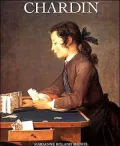
Jean-Baptiste-Simeon Chardin (1699-1779) is acknowledged as one of the finest genre and still-life painters of the eighteenth century. Until now, there has been surprisingly little substantial scholarship published on this great French artist's work. This authoritative and beautiful book redresses that lack, bringing to light a wealth of new material about an important and seminal artist, including paintings discovered within the last decade. A man of humble origins who painted humble subjects, Chardin rose to become one of the most sought-after artists of his day, attracting the patronage of Catherine the Great, Frederick the Great, and the Queen of Sweden, among others. The outstanding colorplates in Chardin clearly demonstrate why his work was so popular, and why it still intrigues us today. They reveal the artist's extraordinary understanding of form and volume, his virtuosity in depicting surface textures, and above all his poetic, yet unsentimental feeling for the common objects of daily life. Chardin's unassuming kitchen-table vignettes were enormously influential on the history of painting in France, where they have been revered for two centuries. They touch us with their calmness and humanity: a young boy building a house of cards; a woman taking tea, interiors with fruit, game, and lustrous copper pans. They are more than just depictions of domestic contentment; Chardin's paintings convey values that transcend his time and bring the artist and the modern observer together. An illustrated catalogue of prints made after Chardin's paintings accompanies a fascinating analysis of Chardin's life and career by Marianne Roland Michel, Director of the noted Galerie Cailleux in Paris and a highly regarded authority on French eighteenth-century painting and drawing. Together with contemporary accounts by Denis Diderot and Charles-Nicholas Cochin, a fully rounded picture emerges of the artist's life, his critical reception, the artistic world of his time, and hisEditorials
Publishers Weekly -
While 18th-century Parisian painter Jean-Baptiste Simon Chardin (1699-1779) is often linked to Flemish and Dutch still lifes, French art historian and gallery director Michel views him as quintessentially French in his sensitivity, spirit, coloristic skill and ineffable touch. And where other critics perceive symbolism or concealed messages, she sees only irreplaceable, unique moments, timelessly rendered, as in Soap Bubbles. Although the heavily annotated, dry text will be of interest mainly to scholars, the nearly 300 illustrations (half of them in color, including scores of full-page plates) make this an attractive coffee-table album. It reproduces numerous genre scenes, portraits and domestic interiors (Lady Taking Tea, The Cellar Boy, Game of Knucklebones) from far-flung museums and private collections. Chardin's ironic self-portraits, with their deeply penetrating gaze and air of affable authority, provide perhaps the best key to the mysterious magic of his still, yet vibrant, compositions. (May)Library Journal
The most illuminating of painters, Chardin (1699-1779) is best known for his still-life paintings, simple arrangements of food and utensils and everyday objects that speak quiet volumes. Chardin created his own place in the stratified world of 18th-century French art and in the process changed and influenced all that came after. Roland Michel, a knowledgeable dealer specializing in 18th-century French art, wrote this very good survey and summary of Chardin's life and work for publication in France in 1994. She draws on contemporary criticism and has a good eye for the expressive detail in the artist's work. Expansively produced (though the color plate of a work in the Art Institue of Chicago is much too white and bright compared with the original; others presumably vary), this book should find a broad audience. For general and specialist collections alike.-Jack Perry Brown, Art Inst. of Chicago Lib., Chicago, IllBook Details
Published
April 1, 1996
Publisher
Harry N. Abrams
Pages
296
Format
Hardcover
ISBN
9780810940413