
Ancient & Medieval Literature, European Literature, Poetry - Literary Criticism, General Christianity, General & Miscellaneous Literary Criticism, Fiction Subjects, English Literature
Log in to track your reading progress.
Overview
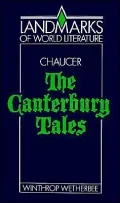
Chaucer's most celebrated work, The Canterbury Tales (c.1387), in which a group of pilgrims entertain each other with stories on the road to Canterbury, is a masterpiece of narration, description, and character portrayal. The tellers and their tales are as fresh and vivid today as they were six centuries ago.An ilustrated retelling of Geoffrey Chaucer's famous work in which a group of pilgrims in fourteenth-century England tell each other stories as they travel on a pilgrimage to the cathedral at Canterbury.
Editorials
Publishers Weekly -
Like Charles Lamb's edition of Shakespeare, Hastings's loose prose translation of seven of Chaucer's tales is more faithful to the work's plot than to the poet's language. This is not a prudish retelling (even the bawdy Miller's tale is included here) but the vigor of Chaucer's text is considerably tamed. In the original, the pilgrims possess unique voices, but here the tone is uniformly bookish. The colloquial speech of the storyteller is replaced by formal prose; for example, while Cohen (see review above) directly translates Chaucer's ``domb as a stoon'' as ``silent as stones,'' Hastings writes ``in solemn silence.'' Cartwright's startling paintings skillfully suggest the stylized flatness of a medieval canvas, but often without the accompanying richness of detail. Like Punch and Judy puppets, the faces and voices of these pilgrims are generally representative but lack the life and charm of the original text. Ages 10-up. (Oct.)Library Journal
The old standby here gets its first facelift in more than 50 years. Librarian/author Ecker and scholar Crook translated Chaucer's Middle English into a more modern, more accesssible form. Large English literature collections should consider.School Library Journal
Gr 5-9 These 13 rollicking interpretations take their inspiration from Chaucer but are freely adapted for young readers. Students will have to get the feel of original text elsewhere: the excellent A Taste of Chaucer (HBJ, 1964; o.p.) by Malcolmson, Farjeon's Tales from Chaucer (Branford, 1948; o.p.) and even the Hieatts' adapted selections from Canterbury Tales (Golden, 1961; o.p.), are long out of print. The emphasis here is on the pilgrims and their stories, and these, despite some shifts to avoid bawdiness, come off as rousingly good. In colorful style and language, McCaughrean creatively reconstructs and adds conversation, event and detail, in keeping with the medieval times, to stitch the tales together. ``Death's Murderers,'' McCaughrean's version of ``How the Three Found Death,'' is exceptionally stark and good. The collection is rounded off by having the pilgrims reach Canterbury, with a look to the return trip. A brief historical note is given on the endpapers. Ambrus' handsome portrait of Chaucer gives a nod to that of the Ellesmere manuscript, but his colorful paintings showing the other pilgrims and their tales are his exuberant own. This attractive volume is a good introduction to medieval stories for reluctant but able junior high readers. Ruth M. McConnell, San Antonio Pub . Lib .Book Details
Published
November 23, 1989
Publisher
Cambridge University Press
Pages
136
Format
Paperback
ISBN
9780521311595