
Espionage, World War II, British History - General & Miscellaneous
Log in to track your reading progress.
Overview
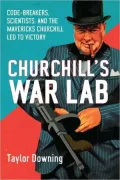
AHistory Book Club selection. As a young boy he re-enacted historic battles with toy soldiers, as a soldier he saw action on three continents, and as the Prime Minister only a direct edict from King George VI could keep him from joining the troops on D-Day.Churchill's War Lab reveals how Churchill's passion for military history, his unique leadership style, and his patronization of radical new ideas would lead to new technology and new tactics that would save lives and enable an Allied victory. No war generated more incredible theories, more technical advances, more scientific leaps, or more pioneering work that lay the foundation for the post-war computer revolution. And it was Churchill's dogged determination and enthusiasm for revolutionary ideas that fuelled this extraordinary outpouring of British genius. From the coauthor of Cold War comes an exciting new take on Churchill's war leadership and the story of a complex, powerful and inventive war leader.
Editorials
Publishers Weekly
While Churchill's biography is the narrative force behind this book, great emphasis is placed on the technological advances made by scientific advisors in both World Wars. These included the methods for code-breaking, the first armored tanks, and the earliest radar systems, to name a few. Downing provides brief biographies of Churchill's most influential scientific advisors, including Professor Frederick Lindemann, later named Lord Cherwell, a physicist who headed the Statistical Branch. Henry Tizard, an early advocate of radar and later scientific ambassador to America, and Alan Turing, a mathematician instrumental in decoding, are among the many other advisors discussed. Churchill's most valuable generals are also recognized, including Gen. Alan Brooke and Gen. Bernard Montgomery. Most of the text, however, is dedicated to the Prime Minister himself and the details of his illustrious career. Descriptions of his meetings with Roosevelt and Stalin are particularly interesting, and the events surrounding D-Day, code-named "Overlord," make for an exciting read. Readers interested in the early stages of technological warfare will certainly find many worthwhile details in this book. For Churchill experts, though, this is probably familiar ground. (June)Library Journal
World War II saw the introduction of numerous new weapons and procedures, with the British prime minister desperate for ways to counter German strength. Churchill enthusiastically supported experiments, new military units, changes in procedures, and unorthodox thinkers who had been disregarded by the establishment. Downing (Battlestations: War Winning Weapons of the Second World War) shows here how, unlike President Roosevelt, Churchill took great pleasure in the details of weapons development and military operations. World War II was as much a scientific/mental war as one of sheer force, and Churchill strove to exploit British advantages. Downing reminds readers how Churchill's own military career had been marked by independence and daring. This well-researched book, organized by broad themes (e.g., the air war, the naval war), focuses on the contentious interactions between Churchill and his exasperated top officers and war cabinet, who resented his energetic interference in their departments. It is a good overview of how a visionary leader must encourage and coordinate the talents of various personalities and organizations to achieve a common goal. Readers will also enjoy Stuart Macrae's recently republished Winston Churchill's Toyshop. VERDICT General readers from high school up will enjoy this fast-paced and informative book. It won't give new information to specialists, but they may enjoy it nonetheless.—Daniel K. Blewett, Coll. of DuPage Lib., Glen Ellyn, ILBook Details
Published
June 2, 2011
Publisher
Overlook Press, The
Pages
416
Format
Hardcover
ISBN
9781590205655