
Rhetoric
Available on Bookshop
Write a review
Books.org participates in affiliate programs including Bookshop.org and the Amazon Services LLC Associates Program. We may earn a commission from qualifying purchases made through links on this page, at no additional cost to you.
Log in to track your reading progress.
Overview
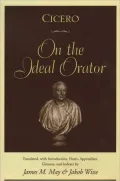
In On the Ideal Orator, (De oratore), Cicero, the greatest Roman orator and prosewriter of his day, gives his mature views on rhetoric, oratory, and philosophy. Cast in the lively, literary form of a dialogue, this classic work presents a daring view of the orator as the master of all language communication while still emphasizing his role at the heart of Roman society and politics. Cicero's conception of the ideal orator represents his own original synthesis of the positions of the philosophers and the rhetoricians in the age-old quarrel between these disciplines.
The first translation of De oratore in over fifty years, this volume is ideal for courses on Cicero and on the history of rhetoric/oratory. James May and Jakob Wisse provide an accurate and accessible translation which is based on--and contributes to--recent advances in our understanding of De oratore and of the many aspects of ancient rhetoric, philosophy, and history relevant to it. Their translation reflects the many variations of Cicero's style, which are essential ingredients of the work. The volume includes extensive annotation, based on current scholarship and offering significant original contributions as well. It is also enhanced by a full introduction covering all important aspects of both the work and its historical background; appendices on Cicero's works, figures of thought and speech, and alternate manuscript readings; a glossary of terms from rhetoric and Roman life and politics; and a comprehensive index of names and places.
Synopsis
In On the Ideal Orator (De oratore) Cicero, the greatest Roman orator and prose-writer of his day, gives his mature views on rhetoric, oratory, and philosophy. In this volume--the first translation of this work in over fifty years--James May and Jakob Wisse provide an accessible, accurate translation which is based on, and contributes to, the many advances in recent scholarship regarding De oratore and the aspects of ancient rhetoric, philosophy, and history relevant to it.
Book Details
Published
March 1, 2001
Publisher
Oxford University Press, USA
Pages
384
Format
Paperback
ISBN
9780195091984