
Corporate Behavior & Responsibility, Civil Rights Law, Legal Theory & Philosophy
Log in to track your reading progress.
Overview
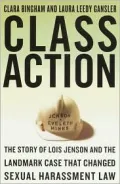
In the coldest reaches of northern Minnesota, a group of women endured a shocking degree of sexual harassment - until one of them stepped forward and sued the company that had turned a blind eye to their pleas for help. Jenson v. Eveleth Mines, the first sexual harassment class action in America, permanently changed the legal landscape as well as the lives of the women who fought the battle.Editorials
The New Yorker
When, in the nineteen-seventies, women started working at Eveleth, an iron mine in Minnesota's Mesabi Range, they were seen by both miners and management as unwelcome interlopers, and were greeted with open sexual antagonism. Pornographic graffiti, incessant propositioning, sexual insults, groping, stalking: Eveleth brought new meaning to the words "hostile working environment." Yet the company did little to stop the abuse, and the union's sense of working-class solidarity did not extend to women's rights. This riveting, assiduously well-reported account follows the tortuous class-action lawsuit that finally improved working conditions at Eveleth and redefined sexual-harassment law. Although the women who sued Eveleth were ultimately vindicated when the company settled, they endured an agonizing decade of depositions, accusations, and trials. "I felt like a house had been dropped on my head," one woman said. "Class Action" is a useful reminder of the emotional and psychological cost of waging even the most successful -- and justified -- lawsuits.Publishers Weekly
In 1997, in reversing a lower court decision, federal appellate Judge Donald Lay wrote in a sexual-harassment class-action lawsuit, Jenson v. Eveleth, "The emotional harm, brought about by this record of human indecency, sought to destroy the human psyche as well as the human spirit.... The humiliation and degradation suffered by these women is irreparable." Journalist Bingham's (Women on the Hill: Challenging the Culture of Congress) and attorney Gansler's deeply felt and disturbing narrative is the story of what informed Judge Lay's decision. In 1975, Lois Jenson became one of the first women to work in the iron mines of Minnesota and the lead plaintiff in the lawsuit. Eveleth Mines was Jenson's employer. The center of the story is the 25-year ordeal Jenson and other women miners underwent: the harshness and callousness of the abuse directed at the women in the uncivilized and misogynist atmosphere of the mine will outrage readers. The equally brutal treatment class members received in the civilized venue of the federal court system, especially by the lawyers for Eveleth, will shock them. The matter-of-fact description of Eveleth's lawyers' assault on Jenson's character during a deposition that inquired about the most intimate details of her life has tremendous immediacy. Because of the personal price the plaintiffs pay, and despite the success of the litigation, this account falls somewhere between a cautionary tale about the dangers facing those who challenge entrenched institutions and a bittersweet celebration of the ultimate effectiveness of the justice system. (On sale June 18) Forecast: This compelling story could hit a nerve, particularly but not only with women readers, with a five-city author tour and other publicity off to a good start: Marie-Claire, Elle and Glamour all have reviews scheduled. Copyright 2002 Cahners Business Information.Library Journal
A collaboration between a journalist and a lawyer, this volume describes in elaborate detail the tortuous path of the first class-action sexual harassment lawsuit, Jenson v. Eveleth Mines. In 1975, the Minnesota mine hired its first four women as the result of a consent decree; Lois Jenson took one of the jobs. Subjected to disgusting and relentless sexual harassment, Jenson went in turn to the company, the union, the state department of human rights, and finally, in 1988, to private counsel. With Title VII expert Paul Sprenger at the helm, the case took another 11 years, as the company's attorneys waged an intense "nuts and sluts" defense, a strategy that cost the mine $15 million. Although ultimately vindicated, the complainants suffered not only from harassment but from the brutalizing process of the litigation. Jenson herself became disabled by stress from the harassment, the hostility of female co-workers, the length of the legal process, and the invasive interrogations connected with the claim for damages. Excessive detail, compelling though it is, diminishes the book's utility. Recommended for large public and academic libraries. Cynthia Harrison, George Washington Univ., Washington, DC Copyright 2002 Cahners Business Information.Kirkus Reviews
A complex account of justice sought-and won-in a case that stretched out over a quarter-century. Lois Jenson, the unlikely heroine of this tale by journalist Bingham (Women on the Hill, 1997) and attorney Gansler, had it tough back in 1974. A single mother of two children born out of wedlock, she lived on welfare, food stamps, and low-paying jobs, barely making ends meet in the far north of Minnesota. When the federal departments of justice and labor required nearby mills and mines to increase their numbers of female and minority employees, she found work, hard and dirty but well paid, at a taconite plant. She was one of the few women outside the front office, and when some of her fellow male coworkers greeted her with lewd remarks and suggestions, it was no surprise; the Mesabi Range's rough, male-dominated society was still "at its core a frontier culture." As another female employee said, local women "didn't know enough to know the men's behavior was offensive or to know it was belittling." Outsider Jenson did, and she complained. She was ignored by management, harassed even further by some of the men, ostracized by some of the women. A union grievance evolved into a seemingly endless class-action lawsuit. Reconstructing courtroom back-and-forth (a snippet of examination: "When you used the word fuck in the workplace, you didn't determine in advance whether or not someone's sensitivities are more acute than yours, did you?"), Bingham and Gansler track the changing fortunes of the suit as it met at first with hostile judges, was heard by a more sympathetic appellate court, and eventually provided a precedent by which subsequent harassment cases would be measured. Detailed but not dense:a sturdy addition to the literature of social justice and contemporary women's issues.Book Details
Published
June 1, 2002
Publisher
New York : Doubleday, 2002.
Pages
400
Format
Hardcover
ISBN
9780385496124