
Psychopathology - General & Miscellaneous, Treatment - General & Miscellaneous - Psychology, Psychotherapy, Cognitive Psychology
Log in to track your reading progress.
Editorials
From The Critics
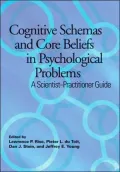
Reviewer: Gary B Kaniuk, Psy.D.(Cermak Health Services)Description: This book addresses how to intervene in psychological problems at the most foundational level in the CBT (cognitive-behavioral therapy) tradition, i.e. cognitive schemas and core beliefs. It will help practitioners deal with individuals suffering from chronic distress from common psychological maladies.
Purpose: As noted in the introduction, "Our volume examines how the general principles of schema theory can be applied to specific clinical problems. The chapters in this volume cover several major psychological problems including depression, eating disorders, posttraumatic stress disorder, substance use disorders, obsessive-compulsive disorder, and schizophrenia, as well as couples distress. Each chapter begins with basic research on schema processes and issues in the assessment of schemas for that particular disorder, followed by a description of the clinical application of the schema-focused approach. Each chapter describes the implications of a schema-focused approach for theory, research, and practice."
Audience: The book is intended for readers with some familiarity with the cognitive therapy literature. In addition, graduate students in advanced classes on cognitive therapy could benefit as well. According to the editors, the contributors "range from clinic directors to faculty members at universities and university medical schools, and all have developed innovative treatment models that combine science with practice."
Features: The first chapter is an introduction that briefly describes schema theory. The remaining eight chapters describe its application with various psychological disorders such as depression, posttraumatic stress disorder, obsessive-compulsive disorder, substance use disorders, eating disorders, and psychosis. The last chapter addresses treatment and research with couples. The authors combine research with practice very nicely and many of the chapters include case examples. This book is very pragmatic, including informative appendixes, tables, and figures. It is very easy to read so therapists with less experience with CBT can apply the concepts. The authors provide good references for readers who wish to go further. The only shortcoming is that in covering many psychological problems, the book can cover each fairly briefly. However, this allows readers to compare and contrast the treatment approach of each problem side-by-side.
Assessment: This book is good for therapists who want to practice CBT with individuals who are having chronic psychological problems. Many of the CBT books only discuss approaches for acute clinical states so there is definitely a need for books like this which consider longer term interventions. The book is practical, easy to read, and provides ideas that can be applied right away in clinical work.
Book Details
Published
January 1, 2007
Publisher
American Psychological Association
Pages
240
Format
Hardcover
ISBN
9781591477822