
Bengal - History, Economic Conditions in Asia, Indian History - Economics Aspects
Log in to track your reading progress.
Overview
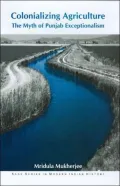
"The myth that Punjab was an exception to the general run of colonial underdevelopment and that it was a favoured child of the British government, was carefully cultivated by colonial officials, concerned about the loyalty of the people of Punjab since it was a major recruitment base for the British Indian army. That the initial success of the Green Revolution occurred in the late 1960s in the Indian province of Punjab further strengthened this notion of exceptionalism, it being wrongly assumed that favourable initial conditions were inherited from the colonial past." Making extensive use of data culled from government archives and private papers in India and Britain, as well as from village surveys, farm accounts and family budgets, the author argues that Punjab was by no means an idyllic land of prosperous peasant proprietors. She maintains that it was also the land of big feudal landlords, rack-rented tenants, and struggling small-holders, who were forced to enlist in the army or migrate to enable their families to pay government taxes and to repay debts.Synopsis
In this study of the agrarian economy of Punjab in India's colonial period, the author takes the economic aspects of the lives of Punjab's peasants as a starting point for understanding the politics of this group from the 1920s to 1947. A comparison is made between Punjab and other regions of colonial India, especially Eastern India.
Book Details
Published
November 1, 2005
Publisher
SAGE Publications
Pages
212
Format
Hardcover
ISBN
9780761934042