
Nature, Science Reference, Environmental Policy, Science Reference, Ecology & Environmental Sciences, Environmental Sciences, Nature - General, Environmental Conservation & Protection, Environmental Politics
Log in to track your reading progress.
Overview
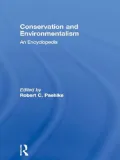
Covers All Aspects of the EnvironmentFocusing on both problems and solutions, this authoritative reference work covers all aspects of the environment, from the Everglades to the Himalayas, from legislation in Australia to pollution problems in Eastern Europe, from tropical rain forests to the Porcupine Caribou herd of the Alaskan and Canadian Arctic. The Encyclopedia is filled with valuable information, encompassing studies of species (butterflies, bats, elephants, dolphins), conservation efforts, environmental organizations, treaties, toxic-chemical hazards, resource conservation, conservation concepts (biodiversity, landscape ecology) energy-use impacts, and other vital subjects. The coverage reflects environmental concerns that have dominated front-page headlines for the past four decades: from the Exxon Valdez to Bhopal and Chernobyl, from air pollution to Love Canal, from whale and dolphin preservation to rhino poaching.
Original Articles by Experts
Some of the best-known environmental professionals in the world have written original articles for this multidisciplinary Encyclopedia, including Norman Myers, Eugene C. Hargrove, Reed F. Noss, Max Oelschlaeger, J. Baird Callicott, George Sessions, M.S. Swaminathan, Gilbert F. White, Michael E. Kraft, Michael P. Cohen, Paul Ekins, and many others. The authors are from 14 countries, and their expertise encompasses the sciences, the professions, social sciences, and humanities. Also represented are the perspectives of major environmental organizations and government agencies in six countries. Maintaining a healthy balance between science and social science, the Encyclopedia isvery strong in law, politics, environmental organizations and history, legislation, and government agencies in the U.S., Canada, Australia, New Zealand, and the European Community.
A comprehensive subject index, extensive cross-references, and "see" and "see also" references with each article make it easy for users to pinpoint exactly the information they need. Also includes three maps.
Editorials
Library Journal
The contributors to this multidisciplinary work are experts from 14 countries in the fields of sciences, humanities, and social sciences. The Encyclopedia encompasses global issues such as conservation efforts, studies of species, treaties, energy-use projects, biographies of individuals, governmental organizations, and environmental organizations. Coverage reflects many environmental concerns that have dominated the headlines for the past four decades: Chernobyl, Love Canal, Bhopal, the Exxon Valdez spill, and protection of endangered species. Alphabetically arranged, the 500 entries vary in length from several paragraphs to several pages. Entries contain a brief bibliography and many cross references. Clearly presented for the lay reader but useful for academic audiences as well, the work complements the environmental dictionary Environmental Literacy (LJ 5/15/93). This unique, comprehensive, well-researched encyclopedia is recommended for academic and public libraries.-Eva Lautemann, DeKalb Coll. Lib., Clarkston, Ga.From The Critics
This addition to the burgeoning literature on the environment presents topics in alphabetical arrangement from "Abbey, Edward" to "Zoos: Institutions in Transition". The 500 signed articles were written by 248 scholars from more than 20 countries. Most represent universities, research organizations, government agencies, or the environmental-law sector. The editor is a professor in the environmental and resource studies program at Trent University in Canada. Many of the entries use scientific language, reflecting the expertise of their authors. The entry "Radon", for example, gives three scientific standards for measuring this gas. Advocacy is another feature of this encyclopedia. The entry "Yellowstone" gives a one-page history of the origins and management practices of the park followed by a plea for public and private organizations to coordinate natural-resource management to preserve the Yellowstone ecosystem The entries fall into 12 categories, such as specific laws and legislation, key individuals in the environmental movement, conservation of species, special habitats, pollution, resources and their sustainability, and publications such as "Audubon" and "Mother Earth News". All entries conclude with bibliographies and cross-references to related entries; some have tables. Many survey articles are subdivided; acid rain is under "Acid Precipitation" and divided into four subtopics: "Aquatic Impacts", "European Experiences", "Legislative Initiatives", and "Terrestrial Impacts", each by a different author, with a separate bibliography and set of cross-references. A few entries for organizations provide addresses and key personnel, but most do not. The detailed index simplifies access to phrased entry headings such as "Former Soviet Union" by creating references to the subject in permuted terms, "Soviet Union [former]". There are also numerous subdivisions of topics in the index, for example; there are 43 subdivisions under "Endangered Species" This scholarly work is similar in size and tone to "The Encyclopedia of the Environment" ["RBB" O 1 94]. Both volumes are strong on public policy and the need for protecting the earth's resources. Since numerous scholars contributed to each volume, both are valuable for providing different viewpoints. Secondary schools and academic libraries that can afford to own both books will find complementary information in them. Unlike Franck's "Green Encyclopedia" (1992), there are no graphs, charts, illustrations, directories, or appendixes with practical advice. The latter work is more appropriate for public and school libraries and for academic libraries needing basic information.Booknews
An excellent reference for a wide audience. It covers all aspects of the environment in some 500 signed original articles which encompass studies of species, conservation efforts, environmental organizations, treaties, toxic chemical hazards, resource conservation, conservation concepts, energy-use impacts, and other subjects. The authors are from 14 countries, and they write from the perspectives of numerous disciplines and professions. Also represented are the perspectives of major environmental organizations and government agencies in six countries. The entries include further readings and are thoroughly cross-referenced. Annotation c. Book News, Inc., Portland, OR (booknews.com)Book Details
Published
April 3, 2013
Publisher
Taylor & Francis
Pages
768
Format
Hardcover
ISBN
9781136640070