
General & Miscellaneous Interviews, Holocaust Biographies, European Authors - Interviews, Holocaust - General & Miscellaneous
Log in to track your reading progress.
Overview
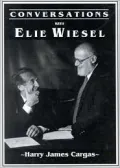
This is an intense and moving dialogue rising out of the Holocaust and extending to the crucial issues of the present. Noted author and teacher Harry James Cargas probes the existence and meaning of good and evil, love and hatred, bigotry and openness with Nobel Laureate, writer, and Holocaust survivor, Elie Wiesel. The result is an in-depth and fascinating look into the religious, literary, and private views of one of the major religious figures of our time.
Editorials
From Barnes & Noble
Elie Wiesel, considered to be one of the world's leading humanitarians and literary icons, weighs in on some of the most pressing issues of our time: the moral responsibility of governments and individuals, capital punishment and its repercussions, ethnic violence, and religious tolerance, among others. His insightful viewpoints are presented in the form of a discussion with Richard D. Heffner, the host of the PBS series The Open Mind.Publishers Weekly
Nobel Peace Prize winner, Holocaust survivor and prolific author Wiesel (Night; etc.) continues to challenge political injustices and to keep memories of the Holocaust alive in the interest of preventing further horror. Over several years, Wiesel appeared on the PBS show The Open Mind, hosted by his friend Heffner (A Documentary History of the United States), professor of communications and public policy at Rutgers. These conversations, culled from the show's transcripts and from a video series called Dialogues, cover everything from the role of the intellectual in public life to the state and nationalism, religion and politics, capital punishment and euthanasia. Throughout, Wiesel speaks with prophetic authority, philosophical wisdom and a storyteller's verve and vivacity. On changing values in language: "We don't talk. We shout.... The civility is gone; not only the tenderness, but the friendship in discourse... we have to start again to teach our contemporaries how to speak.... When language dies, then violence becomes another language." On capital punishment: "I do not believe any civilized society should be at the service of death. I don't think it's human to become an agent of the Angel of Death." On the holocaust and memory: "people took the Holocaust and made it... commercial, they made it kitsch why not say it? kitsch. They trivialized it. In doing so, I think, they caused great harm and prejudice to memory." Always self-effacing, Wiesel repeatedly insists that he possesses no answers: "Actually, it's with questions I am good." These lively, engaging talks offer candid glimpses into the life and work of a leading moral thinker. (Nov. 1) Forecast: Wiesel's moral and intellectualclout will draw even more interest than usual in the wake of the terrible events of September 11. Copyright 2001 Cahners Business Information.KLIATT
Friends for decades, Rutgers Professor of Communications Heffner and Nobel Peace Prize winner and Boston University Humanities Professor Wiesel have spent hours in conversation. Here Heffner has compiled a group of these dialogues on issues central to Wiesel's beliefs and teachings. While the overall tone of this short volume is of the greatest seriousness and the question-answer format can seem initially lacking in warmth, the reader is drawn into the flow of these dialogues. At all times, Wiesel's basic position is one of deep respect for the value of an individual life. The two men consider the role of the intellectual in public life, religion and tolerance, capital punishment, assisted suicide, and, of course, anti-Semitism among their discussions. The charm of the work lies in Wiesel's hesitations, his reflections, and the occasional admission of his inability to work out a definite answer to these weighty questions. Some familiarity with Wiesel's work would seem a prerequisite for a profitable reading of Conversations. A student needs to have read Night at the very least to be able to follow Wiesel's thought. A valuable reading experience. KLIATT Codes: SA—Recommended for senior high school students, advanced students, and adults. 2001, Random House, Schocken, 181p., MooreBook Details
Published
May 1, 1992
Publisher
Diamond Communications
Pages
184
Format
Paperback
ISBN
9780912083582