
Join Books.org — it's free

Mexico - Travel Essays & Descriptions, Travel Essays & Descriptions - General & Miscellaneous, Mexico - Travel
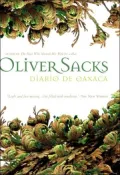
Diario de Oaxaca by Oliver Sacks β€” book cover

Diario de Oaxaca

by Oliver Sacks
Write a review
Log in to track your reading progress.

Overview

Famoso por su capacidad de observacion, Oliver Sacks entrelaza aqui con briosa inteligencia las coloridas hebras de la biologia, la historia y la cultura para tejer un fascinante tapiz de Mexico y de un grupo de buscadores de helechos unidos por una pasion comun. En este extraordinario rincon de Mexico se reune un grupo variado de botanicos, profesionales y aficionados, erudicos que desconocen la pedanteria, con una perspectiva diferente y originales percepciones. Y que esplendida variedad tiene esta parte del mundo! Mientras en Nueva Inglaterra hay unas cien variedades de helechos, en Oaxaca hay casi setecientas. En los mercados de los pueblos se venden por lo menos dos docenas de distintas clases de chiles, desde la que tiene un ligero sabor picante hasta la que es capaz de causar alucinaciones. Es Oaxaca tambien un paraiso de aves y el sueno del arqueologo (abundan las ruinas antiguas que se hacen eco de leyendas precolombinas). Y es aqui donde el Nuevo Mundo hizo al Viejo el delicioso regalo del chocolate, en otro tiempo reservado, bajo pena de muerte, a la realeza azteca.

About the Author:
Oliver Sacks es profesor clinico de neurologia del Albert Einstein College of Medicine y profesor adjunto de neurologia de la University School of Medicine de Nueva York

About the Author, Oliver Sacks

Oliver Sacks
Awakenings author and famed neurologist Oliver Sacks once described the secret to his signature style: "For me, writing and medicine, writing and science, are not separate: they entail each other."

Biography

"I think writing and language are not just to articulate or communicate, but they are also to investigate," the writer and neurologist Oliver Sacks once said. "For me, writing and medicine, writing and science, are not separate: they entail each other." Sacks grew up in a large and prodigiously gifted family of scientists; with their encouragement, he set up his own chemistry lab and spent his days in a swirl of sulfurous fumes and smoke. He was also fascinated by biographies, and spent hours poring over the lives of great scientists like Dmitri Mendeleev, Humphrey Davy,and Marie Curie. When the chaos of World War II and traumatic experiences at boarding school intruded on the "lyrical, mystical perceptions" of Sacks' childhood, he clung to scientific knowledge as a means of ordering and understanding the universe.

After his medical training at Oxford, Sacks migrated to the States to pursue a career in neurology research. But he made a clumsy lab researcher. "I was always dropping things or breaking things," he explained in a lecture, "and eventually they said: 'Get out! Go work with patients. They're less important.'" Sacks went to work at Beth Abraham Hospital in the Bronx, where he was struck by the sight of patients who had survived encephalitis lethargica, the "sleeping sickness." The patients were nearly immobile, but the nurses who cared for them insisted that there were living personalities behind the frozen masks, and Sacks believed the nurses. The story of his work with these patients is told in Sacks' 1973 book Awakenings, which inspired a movie starring Robin Williams and Robert DeNiro and also formed the basis of a play by Harold Pinter.

But Sacks is perhaps best known for his collections of case histories (The Man Who Mistook His Wife for a Hat, An Anthropologist on Mars et al.), which probe the experiences of people with disorders and rare neurological conditions. In telling their stories, he often questions our assumptions about the nature of human consciousness. Part what distinguishes Sacks' work from the traditional case study is his interest in how a patient functions with a disorder, not just how he or she is impaired by it.

Sacks has also drawn on personal experience for wonderfully resonant scientific memoirs that recall his remarkable family, people who have influenced and inspired him, and his lifelong love of medicine and physical science. Meanwhile, he continues to work with patients, to understand them through writing about them, and to point his readers toward new ways of understanding themselves. As Thomas P. Sakmar, interim president of Rockefeller University, said in awarding Sacks the Lewis Thomas Prize: "Sacks presses us to follow him into uncharted regions of human experience -- and compels us to realize, once there, that we are confronting only ourselves."

Good To Know

As a child, Sacks was fascinated by the periodic table of the elements at the Science Museum in London. His boyhood love of chemistry hasn't waned: according to an article in Wired, Sacks owns half a dozen T-shirts with the periodic table printed on them, along with periodic-table coffee mugs, tote bags and mousepads.

Sacks's memoir Uncle Tungsten inspired the creation of Theodore Gray's Periodic Table Table, a wooden table representing Mendeleev's table of the elements and containing samples of each element. Sacks later paid a visit to see the Periodic Table Table -- wearing, of course, one of his periodic-table T-shirts.

Reviews

There are no reviews yet. Log in to write one.

Editorials

Criticas

In this 2002 National Geographic travel journal, neurologist and best-selling author Sacks gives readers a day-by-day account of his trip to Oaxaca, Mexico, to search for ferns. Sacks not only describes his amazing botanical discoveries but also the unexpected historical and cultural findings about Mexico and the Aztec province. Copyright 2003 Reed Business Information.

Book Details

Published
June 15, 2026
Publisher
National Geographic Society
Pages
192
Format
Paperback
ISBN
9781426201608

More by Oliver Sacks

Similar books