
Native North American History, Americas - General & Miscellaneous History, Ethnic & Race Relations, United States History - Colonial Era, United States History - 18th Century - General & Miscellaneous
Log in to track your reading progress.
Overview
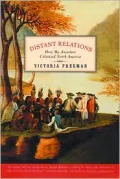
As a North American of European ancestry, Victoria Freeman sought to answer the following question: how did I come to inherit a society that has dispossessed and oppressed the indigenous people of this continent? After seven years of research into her own family’s involvement in the colonization of North America, she uncovered a story that begins in England, in 1588, and concludes in Ontario, in the 1920s. Among many others, we meet Puritan fur-trader and interpreter Thomas Stanton, who in 1637 participated in a genocidal war against the Pequots of New England, and nine-year-old Elisha Searl, who was captured in Massachusetts in 1704 by Native allies of the French, eventually becoming a “white Indian,” but was eventually “deprogrammed” by the Puritans.Through both the ordinary and remarkable episodes in her ancestors’ lives, and her own travels to the places where her ancestors lived, she illuminates the process of North American colonization. Freeman neither demonizes nor whitewashes her ancestors, but instead attempts to understand their actions and choices both in the context of their time and with the benefit of hindsight.
From the Hardcover edition.
Editorials
Toronto Star
[Freeman] puts a uniquely personal spin on 400 years of ethnic cleansing by tracing her own family's role as perpetrators.Publishers Weekly
In her first book, Canadian writer Freeman makes history personal in a study that is part genealogical research, part history and part memoir. Wondering aloud what part her ancestors played in the colonization of North America-especially the efforts to dispossess Native Americans of their lands-Freeman launches herself on a prolonged journey of self- and family discovery. From her researches she learns that two Puritan ministers, John Eliot, the so-called "Apostle to the Indians," and Thomas Weld, both lie in the branches of her family tree. While Eliot insisted on gently converting the Native Americans to Christianity and, to some extent, respecting their rights, Weld exercised an uncompromising orthodoxy and intolerance in his relations with them. Another relative Freeman discovers is fur trader Thomas Stanton, who apparently gained the confidence of Native Americans and treated them with affection and respect. Freeman narrates the stories of these and other relatives, using them as the canvas on which to paint the larger history of colonial times. Her approach poses some problems, though. While retelling broader historical events through the eyes of individuals involved makes history come alive, her accounts of her ancestors' lives are filled with uncertainty ("I don't know if he felt that way"; "I can never know if he would have done this"). In addition, Freeman's historical narrative descends into moralizing about treatment of Native Americans and reparations. By the end, her study, for all its promise, offers little more than one woman's self-exoneration for a history by which she has always "felt burdened." Maps. (Nov. 15) Copyright 2002 Cahners Business Information.Kirkus Reviews
In prose that is often congested, if always earnest, a Canadian teacher and journalist examines 400 years of her family's history with Native Americans. Freeman spent seven years researching this ambitious family saga cum history of North America cum analysis of white-Indian relations. Her endnotes bristle with references to myriads of standard histories, family documents, interviews, public records. She devotes sections to the families who produced her (Wheeler, Eliot, Stanton, Janes, Harris, and Freeman), tries to rehearse as much of their lives as she can and place it in the context of larger historical events, and speculates about the meaning of it all. She makes a number of interesting discoveries, a number of piquant observations, e.g., a Native American would have been horrified to see 16th-century Salisbury, England (the stench, the filth). She notes that the aboriginal people encountered by the Puritans had no concept of hell (making it difficult to threaten them with eternal damnation). And when she enters the minds and imaginations of her ancestors, she can achieve dramatic effects. After a massacre of some Pequots (in which gory business her ancestor Thomas Stanton played a role), she muses, "I wish I knew if he was elated or horrified." In the earlier segments she is reduced to making such comments often, since the documentary record for obvious reasons is slight. She tries to compensate by offering up summaries of known historical events-too often accomplished with long block quotations from her reading. But it doesn't work. We lose track of her narrative, then lose interest. The story strengthens when she reaches the late-19th and early-20th centuries, and her textbrightens considerably towards the end with accounts of her recent visits to New England sites important in her story. (One ancestor's house has been replaced by a driveway for a Dunkin' Donuts.) Her conclusions-though compassionate and sincere-are overwrought and fairly obvious. A thick, heavy loaf in need of leavening. (5 maps, 8 pp. b&w photographs)Book Details
Published
October 1, 2002
Publisher
Steerforth Press
Pages
535
Format
Hardcover
ISBN
9781586420536