
Republicanism & Representative Government, U.S. Politics & Government - 1945 - 1989, U.S. Politics & Government - 1945 to Present, The United States House of Representatives, Political Parties - United States, The United States Congress - General & Miscel
Available on Bookshop
Write a review
Books.org participates in affiliate programs including Bookshop.org and the Amazon Services LLC Associates Program. We may earn a commission from qualifying purchases made through links on this page, at no additional cost to you.
Log in to track your reading progress.
Overview
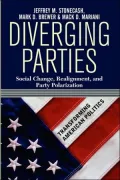
Party polarization in the House of Representatives has increased in recent decades. Explaining this development has been difficult, given current interpretations of American elections. The dominant framework for interpreting elections has been to see them as candidate-centered, or individualistic. This framework may have seemed appropriate as a way to see elections during the 1970s and 1980s, when identification with parties declined and split-ticket voting increased. With increasing party differences, however, the presumptions that campaigns focus on candidates separate from parties, and that voters are less partisan in their voting, do not provide a satisfactory framework for understanding our current situation. This proposed book explains the emergence of party polarization by focusing on how the constituencies of House districts affect partisan outcomes and the subsequent voting behavior of House members. This proposed analysis is premised on the simple argument that members are elected from districts, and an explanation of polarization must begin with districts. The origins of polarization lie in the realignment of the electoral bases of the parties, and the shifting demographic composition of America. Liberal voting is more likely among members from urban, lower-income, largely non-white districts. Conservative voting is more likely among members from higher-income, largely white districts. Realignment has resulted in Democrats representing urban, lower-income, heavily non-white districts, while Republicans are more likely to come from suburban-rural, more affluent, white districts. Perhaps most important, the percentage of districts with a substantial proportion of non-whites is steadily increasing in the United States. The analysis will focus primarily on changes since the 1960s.Book Details
Published
January 1, 2002
Publisher
Westview Press
Pages
208
Format
Paperback
ISBN
9780813398433