
Divorce - General & Miscellaneous, Marriage & Divorce, Divorce, Domestic Relations Law - Divorce & Separation
Log in to track your reading progress.
Overview
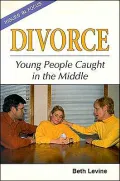
One in every two marriages in the United States is expected to end in divorce. An incredible 40 percent of all teenagers and young people growing up in the 1990s are the children of divorced or separated parents. Children of divorce suffer tremendous emotional turmoil. They must cope with the immediate stresses of a disrupted family and altered lifestyle, and with the long-term effects which may last into adulthood. In Divorce: Young People Caught in the Middle, author Beth Levine explains what happens to young adults before, during, and after their parents' divorces. By relating their personal stories, the author explores the experiences and emotions of teenagers and young adults whose parents are divorced. Also discussed are the problems related to living with stepfamilies, legal proceedings, and establishing custody and child support. The author explains the unique struggles facing these young people as they become adults and examines how children of divorce may be able to make happy marriages of their own. She asserts, "Young people can break the cycle of unhappiness. They are in control of their own lives, and they are not doomed or destined to relive their families' pain."Editorials
School Library Journal
Gr 7-10-These volumes sport wide margins, decorative chapter headings, and subtitles in bold type. In eight chapters, Levine discusses the periods before, during, and after divorce; the economics involved; disappearing dads; living in stepfamilies; and what to expect in the future. While this title contains some useful information, the text is sometimes confusing and often reads as though the writer hasn't determined whether to address young people or their parents. Paula McGuire's Putting It Together (Delacorte, 1987) and Jill Krementz's How It Feels When Parents Divorce (Knopf, 1984; o.p.) are better overall choices; Susan Neiburg Terkel's Understanding Child Custody (Watts, 1991) provides better coverage of that topic. Zeinert's title gives an excellent overview of this constitutional right, explaining both its history and current issues. The 10 chapters cover free speech as it applies to newspapers, books, magazines, music, movies, radio and television, protests, speech, and silence. The text is clearly written, interesting, and flows easily. Black-and-white photographs appear throughout. Students working on reports will find much useful information here; others may find themselves reading this book for pleasure once they flip through the pages.-Dona Weisman, Northeast Texas Library System, GarlandAnne O'Malley
Levine's straightforward, commonsense manual for teens dealing with parents' divorce offers helpful advice and an overall realistic picture of the whole difficult divorce scene. Interesting case studies interwoven with well-presented commentary, facts, and statistics constitute chapters on predivorce stress, the divorce procedure and custody matters, relevant economics, emotional adjustments, relations with noncustodial parents, and the step-family scenario. Levine never sugarcoats the pain and yet provides a hopeful picture for children of divorce--particularly when, for example, parents are able to build better lives than they had in the intact family and when there remain strong emotional attachments between the children and parents or other caring adults. This is a strong title for teens' personal use and for family living, psychology, sociology, and general research curriculum needs.Book Details
Published
January 1, 1995
Publisher
Enslow Publishers, Incorporated
Pages
112
Format
Binding
ISBN
9780894906336