
Criminal Law & Procedure, Biology & Life Sciences, Law Enforcement, Courts & Trial Practice, Clinical Medicine, Genetics
Log in to track your reading progress.
Editorials
Children's Literature
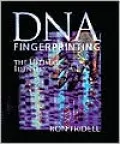
Over the past two decades, scientists have made groundbreaking advances in the study of genetics. By beginning to unravel the genetic signatures of individuals, scientists have set the stage for novel uses of their data. This fascinating science book deals with the history of DNA research and its real-life applications. Readers are introduced to some of the scientists who pioneered the study of these blueprints of life. Through their work and that of their successors, DNA information has come to have many diverse uses. For example, DNA profiling is now commonly used in legal cases as a means of both finding culprits and freeing those falsely accused or convicted. In the environmental field, DNA data can be used to identify those guilty of poaching, preying upon endangered species or illegally harvesting timber from protected areas. In the medical field, DNA research has opened the door to enormous advances in predicting and treating serious illnesses. This well written and researched book will not only inform, but also engage readers. 2001, Franklin Watts, $24.00. Ages 10 up. Reviewer: Greg M. RomaneckVOYA
Deoxyribonucleic acid (DNA) fingerprinting is the process of identifying the unique genetic makeup of a person through uncovering the patterns in his or her DNA, which is contained in almost every cell in the body. Beginning with its discovery and development in the early 1980s, Fridell gives a concise and fascinating overview of DNA fingerprinting, covering its various uses and concentrating on its role in the identification of criminals. He discusses possible future applications, such as the determination of an individual's predisposition toward certain diseases, and explores the ethical problems involved. The book's introduction and first chapter are rather technical reading for a novice who knows nothing about DNA. Those unfamiliar with the subject, however, will find words that appear in the glossary helpfully italicized within the text. In the second chapter, the pace picks up significantly, and readers will be enthralled by descriptions of how DNA fingerprinting has been used to solve highly publicized murders, to find the identity of a soldier buried at the Tomb of the Unknowns, and to expose an imposter who claimed to be the daughter of a Russian czar. The author manages to remain objective while covering all angles of a complex issue. He has included a list of books, videos, organizations, and Web sites as sources for more information. For teen fans of the television show CSI or those researching the popular topic of forensics for term papers, this book will be an excellent choice. Glossary. Index. Photos. Source Notes. Further Reading. VOYA CODES: 3Q 2P J S (Readable without serious defects; For the YA with a special interest in the subject; Junior High, defined as grades 7 to9; Senior High, defined as grades 10 to 12). 2001, Franklin Watts, 112p,— Dotsy Harland
School Library Journal
Gr 6 Up-Fridell has done an outstanding job of making the history of this technology accessible to readers. He covers its somewhat checkered background and its science, and discusses how it's being used today. Many other topics are discussed, including how the technique is used to identify casualties of war, exonerate incarcerated individuals, and provide accurate answers to historical questions, e.g., to determine if Thomas Jefferson was the father of Sally Hemings's son. The author concludes with some of the concerns about uses of the technology. Black-and-white photographs and reproductions complement the text nicely. The endnotes will be especially helpful for reports, as they include Web addresses. This readable introduction will be a valuable research tool for any school or public library.-Maren Ostergard, Bellevue Regional Library, WA Copyright 2001 Cahners Business Information.Book Details
Published
March 1, 2001
Publisher
Scholastic Library Publishing
Pages
112
Format
Binding
ISBN
9780531118580