
Psychological Self-Help - General & Miscellaneous, Research - Psychology, Methodology - Psychology
Log in to track your reading progress.
Overview
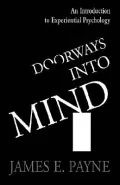
In Doorways into Mind, James E. Payne does what three generations of psychologists said could not be done. He uses subjective tools with rigor in experiments that are repeatable, to discover how the mind carries out its basic functions. The book opens new pathways for scientists engaged in psychological research and provides thoughtful lay readers with a deeper understanding of their own motivations and behavior. Payne’s book answers ten basic questions about mind functions. How does the mind relate to space and time? What are mind tools and how do they work? What is the subconscious, how does it relate to the conscious mind, and how can the two work together to enhance learning and understanding? Why are humans so prone to conflict? What are the mechanisms the mind uses to adapt to change? How does the mind build its conceptual databases? How does the mind pursue homeostatic, balance-seeking goals, such as the avoidance of pain and the satisfaction of hunger and sexual need? How does the mind pursue transcendent goals such as wisdom, truth, beauty, and justice? How can we make better use of life-positive adaptive mechanisms such as analysis, synthesis, conceptualization, and sublimation? How can we avoid the destructiveness of life-negative mechanisms such as repression, regression, and inversion? Doorways into Mind may usher in a new era of subjective research on mind functions. Payne is the co-author with pharmacologist Kenneth Blum of Alcohol and the Addictive Brain. At 92 still active in full-time research, he lives with his wife, Marjorie, in Berwyn, Pennsylvania. Jacket Design and basic layout: Larry Smitherman, Austin, Texas.Book Details
Published
October 5, 2004
Publisher
Xlibris Corporation
Pages
236
Format
Paperback
ISBN
9781413434217