
History of Economics, British History - Social Aspects, European Studies - Great Britain, Economic Conditions in Europe - Great Britain
Log in to track your reading progress.
Overview
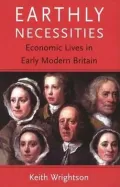
This book seeks to redefine the economic history of early modern Britain for a new generation of readers. Combining the research of economic historians with the insights provided by recent advances in social and cultural history, Keith Wrightson describes the basic institutions and relationships of economic life, traces the processes of change, and examines how these changes affected men, women, and children at all social levels.Synopsis
In this elegant redefinition of the economic history of early modern Britain, Keith Wrightson combines the research of economic historians with the insights of social and cultural history. He describes the basic institutions and relationships of economic life, traces the processes of change, and vividly demonstrates the effects of these changes on men, women, and children at all social levels. The New Economic History of Britain Series
History Today - James Sharpe
Well informed,well nuanced,[and] readable. . . . A very effective account of a long and complex transition in British economic life,a transition characterized by the advance of commercialization.
Editorials
Choice
Wrightson has written a splendid book that will define early modern British social history for the next generation. . . . In beautifully crafted prose . . . he begins with a fine historiographical essay,manages to include Scotland and Wales,and closes with a useful bibliography. . . . Must reading for anyone with a serious interest in European social and economic history.James Sharpe
Well informed, well nuanced, [and] readable... . A very effective account of a long and complex transition in British economic life, a transition characterized by the advance of commercialization.— History Today
James Sharpe
Well informed,well nuanced,[and] readable. . . . A very effective account of a long and complex transition in British economic life,a transition characterized by the advance of commercialization.—History Today
John Morrill
This is a wonderful book; profoundly learned,brilliantly conceptualized,confidently and clearly and vividly written. It is truly a distinguished piece of work.Martin Daunton
Magisterial . . . the best introduction to current interpretations of early modern Britain.—Times Higher Education Supplement
Martin Daunton
Magisterial ... the best introduction to current interpretations of early modern Britain.— Times Higher Education Supplement
Nigel Goose
A remarkable book, particularly in the manner in which it weaves together aspects of economic, social, political, and intellectual and cultural history... . It is elegantly written, measured and immensely stimulating.— Reviews of History
Nigel Goose
A remarkable book,particularly in the manner in which it weaves together aspects of economic,social,political,and intellectual and cultural history. . . . It is elegantly written,measured and immensely stimulating.—Reviews of History
Paul Slack
I know of no other work which shows so vividly what the long transition to a market society meant for those involved, and how ... it came about.— Times Literary Supplement
Paul Slack
I know of no other work which shows so vividly what the long transition to a market society meant for those involved,and how . . . it came about.—Times Literary Supplement
Steve Hindle
This . . . is a splendid book, beautifully organized, mellifluously written, and powerfully evocative of the birthpangs of market culture. It convincingly shows why economic history matters; why the time is right for a new synthesis; and why there has been such long-standing concern with the early modern period as a time of change.Steve Hindle
This ... is a splendid book, beautifully organized, mellifluously written, and powerfully evocative of the birthpangs of market culture. It convincingly shows why economic history matters; why the time is right for a new synthesis; and why there has been such long-standing concern with the early modern period as a time of change.— Rural History
Library Journal
With this synthesis by Yale social historian Wrightson, formerly of Cambridge, the publisher launches a new series edited by David Cannadine. This volume covers Britain's socioeconomic transformations between 1470 and 1750, a turbulent period that transfigured England through complex changes dubbed the "Industrial Revolution." Wrightson seeks to put this metamorphosis in social context, commencing with details of the lives of laborers, yeomen, gentle folk, craftsmen, and nobles in early Tudor times. In the second part, he discusses interlinked commercial, political, social, and other transitions of Elizabethan, Stuart, and early Hanoverian times. An analysis of late 17th- and mid-18th-century society and economy caps the work. Wrightson's innovativeness lies in interweaving social and economic literatures into a coherent whole and in covering Wales and Scotland. His well-written, scholarly prose is accessible. Detailed recommended readings and the identification of many scholarly sources in text replace notes. Highly recommended for academic and larger public libraries.--Nigel Tappin, Huntsville, Ont. Copyright 2000 Cahners Business Information.Book Details
Published
September 1, 2000
Publisher
Yale University Press
Pages
384
Format
Hardcover
ISBN
9780300083910