
Religion & Beliefs - Fiction, Asian Peoples & Cultures - Fiction & Literature
Log in to track your reading progress.
Overview
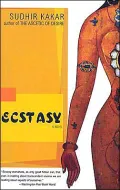
Sudhir Kakar, a renowned psychoanalyst and the author of the acclaimed The Ascetic of Desire, brings a penetrating understanding of philosophy, religion, and the human psyche to his evocative second novel, Ecstasy. Ram Das Baba, as his devotees call him, is the son of a devout Brahmin family. He spends a lifetime seeking spiritual knowledge and his journey is filled with illuminating visions, severe tribulations, and an unwavering faith. His destiny as a highly evolved Sadhu is fulfilled through ordeals of monastic bliss, tantric awakening, madness, and transexuality. But as his life nears its end he meets a young man who belongs to a very different India and a profound relationship develops.
Editorials
Publishers Weekly
Set in 20th-century India, yet based on the historical narratives of 19th-century mystics, this intriguing bildungsroman is a free-floating excursion into the psychological paradoxes of the pursuit of nirvana. As Gopal, a young Brahmin and aspiring sadhu (monk), grows up in a 1930s village, his feminine appearance and strong attachment to his mother indicate his ambiguous sexuality. Signs of his saintliness are evident from the beginning as well, and his ascension to the position of Paramahamsa Ram Das Baba is heavily foreshadowed. Jumping ahead several decades, we meet Vivek, a worldly, well-educated student wrestler who visits Ram Das Baba on a whim and is shocked by the warmth and intensity of his welcome. After making it clear that Vivek, too, shows signs of a spiritual calling"including a keen disinterest in women"the narrative returns to Gopal's youth and recalls his captivating ascent to sainthood. Central to this transformation are talking bronze idols, tantalizing visions of the sex act, possession by female goddesses and six-week meditation fasts. As in The Ascetic of Desire, Kakar's fascinating novel that doubled as an essay on sex, the author's greatest strengths lie in his ability to portray the emotional conflicts resulting from physical experiences. Simple daily events and godly revelations are narrated in the same gentle, vivid prose. Although Kakar's sympathies and well-honed talent are generously devoted to the exploration of his characters' mystic experiences, his clear awareness of their interpretation in Western culture can border on irony. At times, his half-grounded, half-fantastic narration causes his characters to seem naOve and misguided. Whether this is part of the tangled web Kakar weaves or simply an unfortunate consequence of his attempt to combine story and philosophy remains open to interpretation, like much of this lusciously imagined novel. Agent, Borchardt & Borchardt. (June) Forecast: Kakar, a celebrated Indian psychoanalyst, is a bestselling writer in India. His audience will undoubtedly be narrower here, but this is top-of-the-line fiction for those interested in Eastern religions. Copyright 2002 Cahners Business Information.Library Journal
Psychoanalyst Kakar is the author of several works of nonfiction and an earlier novel (The Ascetic of Desire: A Novel of the Kamasutra) and is a cotranslator, with Wendy Doniger, of Vatsyayana's Kamasutra. Here he recounts the story of Baba Ram Das, from his early years as the unhappy only child of a Brahmin widow to his renown as a holy figure. It's a tale of unwavering faith in the face of great difficulty and bolstered by mystic visions. Baba's bi- or transsexuality must be read not in modern terms but as a sign of the thin film dividing genders as part of a universal holiness. His disciple, an initially skeptical university student, modifies Baba's teaching and becomes part of a new "manly" Hinduism and the post-partition Indian power structure. Kakar is not a mystic but is obviously fascinated with those who choose this path or are chosen by it. Readers will be helped by a working knowledge of the manifestations of the One in the Hindu pantheon, but close reading will suffice for those new to the subject. Buy for larger fiction collections or for collections where interest in Indian spirituality is high. Judith Kicinski, Sarah Lawrence Coll. Lib., Bronxville, NY Copyright 2002 Cahners Business Information.Kirkus Reviews
From India, Kakir's second (The Ascetic of Desire, 2000, not reviewed) tells turgidly of a young Brahmin's growth into a guru. Writing as an outsider about mysticism, Kakir offers a simple plot: one boy grows up to be a holy man, then another follows in his footsteps. The first, Gopal, starts out in the small village of Deogarh, 30 miles north of Jaipur, in the 1930s. Cursed-though he's also gifted-with androgynous physical traits (breasts, a beautiful singing voice), Gopal never fits in with his peers, but he is highly sought after as a singer at religious ceremonies. After a strange encounter with a travelling tantrik, Gopal is overcome by spiritual madness and his mother takes him on a healing pilgrimage to Balaji. There, he comes under the eye of a travelling older sadhu named Madhavacharya, who becomes the boy's mentor and takes him into the monastery at Galta. After some feeble monastery intrigue-another monk wants to modernize and tries to oust Madhavacharya-Gopal sets out to live alone in a life of selfless contemplation. Eventually he encounters Nangta, a.k.a. "The Naked One," a more powerful sadhu than Madhavacharya, who becomes his guru. Years later, in the independent India of the 1960s, Gopal, now a full-fledged elder known as Ram Das Baba, finds a promising youngster named Vivek, who he thinks could take his place. One day after meeting with Gopal, Vivek plunges into mental confusion: "His mind was in turmoil as he cycled back to the city. He could not understand what had happened. Was that awful emptiness and the utter disconnectedness of things a revelation of the secret of the universe? Or of deep structures of his own psyche? Was it some kind of suggestion implanted inhis mind by the Baba?" Similar passages, unfortunately, are characteristic of the whole. Hazy and unrewarding.Book Details
Published
October 1, 2003
Publisher
Overlook Press
Pages
251
Format
Paperback
ISBN
9781585674589