
Art - General & Miscellaneous, Victorian & Edwardian Art, British Art, Arts & Crafts Movement - Art, Post-Impressionism & Art of the fin de siecle, Pre-Raphaelites
Log in to track your reading progress.
Overview
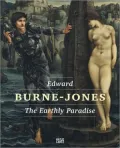
The prototypical Pre-Raphaelite artist, Edward Burne-Jones (1833-1898) embodied in his art the glamours of Victorian Romantic painting, harking back to an Arthurian Medieval England of chivalry, virtue, Arcadian delight and dreamy sensuality. "I mean by a picture a beautiful, romantic dream of something that never was, never will be," he once wrote, "in a light better than any light that ever shone-in a land no one can define or remember, only desire." Burne-Jones' fantasies of an ideal Albion offered solace against the onset of the Industrial Revolution, which had increasingly come to determine urban life in Victorian Britain, and which his close friend William Morris had also critiqued in his bestselling poetry book The Earthly Paradise (1868). This volume explores Burne-Jones' vision of an "Earthly Paradise" as expressed in painting cycles such as Perseus, Amor and Psyche, St George and Briar Rose, and his wonderful Arthurian tapestry sequences and book illustrations. It also opens up the artist's more practical efforts to secure this earthly paradise through the domestic crafts, rejuvenating the Victorian interior through Medieval precedents: carpets, textiles, stained glass windows, furniture and other Arts and Crafts objects. In emphasizing the conceptual unity of Burne-Jones' painting cycles and domestic designs, this monograph reveals his vision to be a coherent expression and longing for a finer world.Edward Burne-Jones was educated at Exeter College, Oxford, where he met his future collaborators, the artist-poets William Morris and Dante Gabriel Rossetti, under whose influence he left Oxford without graduating. From his first major exhibition in 1877, Burne-Jones was a hit with the English public; his 1884 painting "King Cophetua and the Beggar Maid" remains a classic expression of the Pre-Raphaelite Brotherhood sensibility. After his death in 1898, Burne-Jones' legacy became most apparent in the decorative arts.Book Details
Published
March 1, 2010
Publisher
Hatje Cantz Verlag GmbH & Co KG
Pages
232
Format
Hardcover
ISBN
9783775725170