
U.S. Poets - Literary Biography
Log in to track your reading progress.
Overview
Throughout the forty-five years of his professional writing life, Edward Estlin Cummings consistently celebrated the ordinary, reviled pretentiousness, scourged conformity, experimented boldly with words and syntax and punctuation, and wrote some of the most erotic and tender love poetry in the English language. Yet Cummings could also be difficult, truculent, opinionated, wrong-headed, emotional, bigoted and egotistical. Dubbed by Ezra Pound as "Whitman's one living descendant," Cummings sang of himself and of America in a unique voice, as resonant now as it was a half-century ago.Charismatic and famous among the famous, Cummings always seemed to be in the right place at the right time, and was a major presence wherever he resided, whether in Cambridge, Europe or New York. He counted some of the most important artists of his time as friends: Pound, Hemingway, Dylan Thomas and many more.
"Sawyer-Lauçanno emphasizes the relation of the private man to his work, offering fresh insights into the grand optical arrangement of Cummings's books."--Starred Library Journal Review
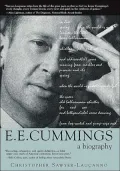
For nearly half a century, the personal papers, journals and diaries of Edward Estlin Cummings were kept from public view. These documents reveal far more about the inner life of the famous poet and painter than has ever been known. Now, noted biographer Christopher Sawyer-Lauçanno presents the first, definitive, revelatory life story of E.E. Cummings (1894–1962), an American original.
"Well-researched, comprehensive, and essential to understanding the artist and the artistry."--Starred Kirkus Reviews
For E.E. Cummings: A Biography, the author had unprecedented access toall of Cummings's papers-anguished diary entries, reflections on consultations with two psychoanalysts, an autobiographical novel, and a carefully prepared manuscript containing more than one hundred blatantly erotic poems.
In the words of William Corbett, author of Boston Vermont and Don't Think Look, "E.E. Cummings, Yankee individualist and, rare for an American poet, satirist is here in full. This means warts and all, but Sawyer-Lauçanno has not come to judge. In this readable and absorbing life he has paid Cummings the honor of clear-eyed candor." Christopher Sawyer-Lauçanno paints a full and memorable portrait of this extraordinary American poet.
Editorials
Publishers Weekly
This nimble biography of the self-proclaimed "`small eye poet,'" who united the avant-garde with tradition in his creations, works best as the story of a man in lifelong agitation about his desires and the demands of his real life. Born in Cambridge, Mass., to an established family, his father a Harvard instructor, Edward Estlin Cummings (1894-1962) came to reject his father's piety but was consumed by the guilt his upright upbringing engendered, a condition that affected his art and his interactions with women throughout his life. Cummings's student years at Harvard and his WWI involvement are covered at length, with particular attention to the publication of his first prose work, The Enormous Room, about being incarcerated in a French prison camp. Biographer Sawyer-Lau anno (An Invisible Spectator: A Biography of Paul Bowles) is especially strong in presenting Cummings's liaisons with women, particularly his two failed marriages, as stories of moral shortcomings, not the inevitabilities of youth. He offers enlightening analyses of Cummings's painting and writing, with an interesting take on the well-known "Anyone Lived in a Pretty How Town." Sawyer-Lau anno is so adept at weaving together the difficult elements of Cummings's life that it is the biographer's accomplishment, more than the poet's, that remains in the mind. Agent, Roslyn Targ. (Oct.) Copyright 2004 Reed Business Information.Library Journal
E.E. Cummings's poetry cannot be mistaken for anything else it is perhaps the most distinctive verse in the English language. Cummings was equally a painter and a poet, and his poetry gains its great originality from the artist's strong visual sense. In fact, he anticipated by decades postmodernism in his use of language and the theater of the absurd in his plays. A poet and a writer-in-residence at MIT, Sawyer-Lau anno (The Continual Pilgrimage) emphasizes the relation of the private man to his work, offering fresh insights into the grand optical arrangement of Cummings's books, which are lost when the poems are read in anthologies. Although the current standard biography of Cummings, Richard S. Kennedy's Dreams in the Mirror (2d ed. 1982), will remain useful for its broader perspectives on the poet and his times, all academic and public libraries with an interest in poetry will want to acquire this biography of a modernist giant. Vince Brewton, Univ. of North Alabama, Florence Copyright 2004 Reed Business Information.Kirkus Reviews
A major new biography of the poet known for his fondness for the lower-case, the fractured word (and line), the idiosyncratic spelling, the prefix un-, the arresting phrase, and-later on-anti-Semitism. Sawyer-Laucanno (Writer-in-Residence/M.I.T.; The Continual Pilgrimage: American Writers in Paris, 1992, etc.) here takes on a most compelling subject. Edward Estlin Cummings (1894-1962) was the son of a powerful father-a Harvard professor, a Congregationalist minister, a man so handy he built houses-and an unfailingly supportive mother. He crafted careers in both poetry and painting, neither lucrative until near the end, and led a life with some moments so truly bizarre that they could have sated even today's voracious tabloid-TV news. Cummings's father was killed in a snowstorm when a train cut his car in half moments after he'd stopped to clear the windshield. Cummings had sexual relations and a child with a good friend's wife, whom he subsequently married, then divorced. His daughter grew up not knowing the identity of her father, and when she met him years later, she felt an attraction . . . then learned the news. Traditional in design, the biography begins with the poet's death, retreats to his birth, advances toward his death, ends with some paragraphs about his legacy. The volume, featuring as much praise as analysis, reads at times almost like a 19th-century "life." Cummings was, declares the author, "a masterful lyric poet, and, quite simply, the master of the love poem." Similar encomiums appear just about anytime Sawyer-Laucanno discusses Cummings's work. Moreover, until near the end, when he finally chides the poet, he suggests others were to blame for Cummings's personalfailings. When he abandons his role as apologist, however, the author has many bright things to say about the poems and their gifted creator. Well-researched, comprehensive, and essential to understanding the artist and the artistry. (31 b&w photos, not seen)Agent: Roslyn TargBook Details
Published
November 1, 2004
Publisher
Sourcebooks, Inc
Pages
624
Format
Hardcover, 2004
ISBN
9781570717758