
Join Books.org — it's free

Fiction, Romance, Fiction & Literature Classics, World Literature, Fiction Subjects
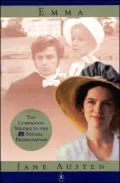
Emma by Jane Austen β€” book cover

Emma

by Jane Austen
Write a review
Log in to track your reading progress.

Overview

Emma (1816) is Jane Austen's most characteristic work. Convinced that she understands the world, Emma rules over her invalid father and the small social circle of Highbury with well-meaning tyranny. But she is highly fallible where love is concerned, and her failings there cause many misunderstandings - as well as giving the reader much enjoyment as order is restored. In her new introduction to this edition Terry Castle examines the pleasure given by Emma's reassuringly stable world and by its comedy, and examines the relationships, imagery, and continuing power of Austen's perhaps greatest novel.

About the Author, Jane Austen

Jane Austen
Jane Austen's delightful, carefully wrought novels of manners remain surprisingly relevant, nearly 200 years after they were first published. Her novels -- Pride and Prejudice and Emma among them -- are those rare books that offer us a glimpse at the mores of a specific period while addressing the complexities of love, honor, and responsibility that still intrigue us today.

Biography

In 1801, George Austen retired from the clergy, and Jane, Cassandra, and their parents took up residence in Bath, a fashionable town Jane liked far less than her native village. Jane seems to have written little during this period. When Mr. Austen died in 1805, the three women, Mrs. Austen and her daughters, moved first to Southampton and then, partly subsidized by Jane's brothers, occupied a house in Chawton, a village not unlike Jane's first home. There she began to work on writing and pursued publishing once more, leading to the anonymous publication of Sense and Sensibility in 1811 and Pride and Prejudice in 1813, to modestly good reviews.

Known for her cheerful, modest, and witty character, Jane Austen had a busy family and social life, but as far as we know very little direct romantic experience. There were early flirtations, a quickly retracted agreement to marry the wealthy brother of a friend, and a rumored short-lived attachment -- while she was traveling -- that has not been verified. Her last years were quiet and devoted to family, friends, and writing her final novels. In 1817 she had to interrupt work on her last and unfinished novel, Sanditon, because she fell ill. She died on July 18, 1817, in Winchester, where she had been taken for medical treatment. After her death, her novels Northanger Abbey and Persuasion were published, together with a biographical notice, due to the efforts of her brother Henry. Austen is buried in Winchester Cathedral.

Author biography courtesy of Barnes & Noble Books.

Reviews

There are no reviews yet. Log in to write one.

Editorials

Library Journal

This is another case where a classic is being reprinted simply as a tie-in to a TV/feature film presentation. Libraries, nonetheless, can benefit by picking up a quality hardcover for a nice price.

From Barnes & Noble

Charming, willful Emma Woodehouse amuses herself by planning other people's lives. When her interfering backfires, she learns a bitter lesson: well-intentioned busybodies are as resented as those motivated by ill will, and everyone should learn to respect the individuality of others.

Book Details

Published
February 1, 1997
Publisher
New York : Modern Library, [1997]
Pages
353
Format
Hardcover
ISBN
9780679602576

More by Jane Austen

Similar books