
Women's Fiction, European Peoples & Cultures - Fiction & Literature, Italian Fiction
Available on Bookshop
Write a review
Books.org participates in affiliate programs including Bookshop.org and the Amazon Services LLC Associates Program. We may earn a commission from qualifying purchases made through links on this page, at no additional cost to you.
Log in to track your reading progress.
Overview
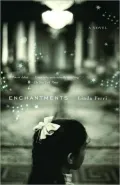
The narrator of Linda Ferri’s charismatic debut is a fortunate daughter, growing up with her family in Italy and France, leading a life of wonder and plenty. There is horseback riding. There are late-night ice cream runs. There are neighbors, friends, and eventually, boys. For the time being, suffering means tickle torture, a lost turtle, or a bossy friend.But, as she grows, the world around her begins to sharpen. Shadows appear and doubts begin to creep. And finally, the dangers of the adult world come into full view, first with the Paris riots of May, 1968, and then when tragedy strikes much closer to home.
Refreshingly joyful, full of the things that children do, Enchantments is also something much more profound: an exploration of the lasting significance of the impressions of our youth.
Editorials
Minna Proctor
Enchantments, more a series of linked vignettes than a proper novel, portrays a child's manifold attempts to assign meaning to life -- her often astonishing ability to do so is matched by the magnificence of her failures. It is, in fact, a disservice to Linda Ferri's slim but potent debut, which has been adroitly translated from the Italian by the novelist John Casey, to harp on the ballet audition, which comes at the end of the book. This scene's very lightness is an ironic and perfectly calibrated lead-up to the narrative's devastating ending.— The New York Times
Publishers Weekly
Small clouds lurk at the edge of the sun-drenched days in screenwriter Ferri's (The Son's Room) first novel, making this fictional memoir of a privileged Italian girlhood all the more enchanting. The unnamed young narrator considers her father to be "magical," though she notices his eyes are "like a monster's" and he engages in "uncertain business affairs." Envisioning herself as a "sorrowful tragic heroine," she betrays her beloved sister by transferring classes at school, demands to play the dying Beth in homemade productions of Little Women and sharpens her preteen self-righteousness on her parents. When not helping to stage elaborate circuses in their rambling apartment, her two older brothers hang dolls from curtain rods. But this mesmeric world proves to be as sweet and as fleeting as her rare nighttime treat of a sugar cube moistened with cognac. Sex and death, those twinned symbols of adulthood, drift ever closer, and the lyrical episodes gambol toward a melancholic finale that changes the girl into a grownup. Melissa P.'s recently published erotic diary of an Italian adolescent, 100 Strokes of the Brush Before Bed, begins just beyond the chronological boundaries of Ferri's chaste story (her narrator stands at the threshold of the "gymnasium of seduction"). Both works, equally powerful and idiosyncratic, explore the multiple moments that mark the end of childhood and the beginning of adulthood. (Feb.) Copyright 2005 Reed Business Information.School Library Journal
Adult/High School-An unnamed Italian girl moves to Paris with her family sometime after World War II. While the story appears to be told in a linear fashion, it is not one in which time seems all that important. Time matters for the preteen narrator as her age informs the tale she tells and how she tells it; what happens to her; and, most importantly, how she relates to her family. Even though the story takes in other places and characters, it always returns to her life with her parents and siblings, her relatives' omnipresence, and their roles. Ferri writes with a deft hand. The book is a series of vignettes, giving the impression of a novel by pointillism. Its appeal comes from the ease with which readers are drawn in and carried along-light and shadows and a sense of enchantment are to be found throughout this coming-of-age story.-Ted Westervelt, Library of Congress, Washington, DC Copyright 2005 Reed Business Information.Kirkus Reviews
A charming, weightless collection of vignettes tracking a wealthy Italian family in late-1960s Paris. In each of two-dozen sketches, first-novelist and screenwriter Ferri (The Son's Room) demonstrates a terrific eye for setting up a small, perfect scene to be played out through a young girl's histrionics. Little by little, details of the narrator's life emerge: the Italian family has moved to Paris in the wake of the father's shadowy work (he's a gambler and businessman, former partisan and cavalry officer, now fabulously wealthy); the mother is Italian-American, and the family occasionally visits the relatives in New York; the narrator is uncommonly attached to her younger sister, Clara, an ally against the two older brothers, and the girls attend an Italian school in Paris; the family lives in a Proustian apartment house, spending the long summer vacation in a villa in the Italian countryside. More intimately, the sketches offer touching observations of the narrator's shifting feelings and alliances, set against the larger adult world the children understand little. The two sisters are traumatically separated into different classes at school; an aging governess is hired to care for them afternoons, showing them a life that has suffered from the "three-headed Hydra (War, Bankruptcy, Divorce)"; the narrator accompanies her mother as Lady of Charity to visit a poor Italian family and is shocked by the contrast to her father's greedy wealth; and her first humiliation is being unable to handle her father's wild mare, the terrible "gray czarina." Occasionally, a reference marks the time period, as that the father met Brigitte Bardot in the Nice airport, or that Simone de Beauvoir spoke at theChamp de Mars demonstration in May 1968. Each scene holds a sweet distillation of feeling but little development, resulting in an impressionist enchantment perfect for the screen, though somewhat insubstantial for the page. The small thrills and heartbreaks of childhood.Book Details
Published
February 25, 2009
Publisher
Knopf Doubleday Publishing Group
Pages
144
ISBN
9780307484277