
Philosophy of Science - Social Aspects, Philosophical & Religious Aspects of Technology, Science - General & Miscellaneous, Ethics & Moral Philosophy - Applied - General & Miscellaneous
Log in to track your reading progress.
Overview
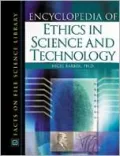
Technology has greatly expanded the scope of what we may do, and science has given us a keener appreciation of the potentially deleterious consequences of our actions. Encyclopedia of Ethics in Science and Technology brings together for the first time the central concepts, people, facts, phenomena, and controversies associated with the ethics of science and technology, as well as the seminal figures and formative ideas in both fields. More than 400 cross-referenced entries discuss the ethical issues affecting industrialized nations, giving the encyclopedia a Western focus, although the influence of other traditions is acknowledged. The encyclopedia features a helpful listing of organizations, resources, and websites; entry-specific recommended readings; and an extensive index. Encyclopedia of Ethics in Science and Technology is an indispensable resource for students and scientists looking for fair and balanced information on the ethics behind past, present, and future issues in science and technology.Editorials
Library Journal
Written by a psychologist who does research more in the area of human reproductive behavior (The Science of Romance), this slim, one-volume encyclopedia collects 400 articles covering the concepts, people, important events, and controversies associated with ethical issues in science and technology. Although coverage of such topics as stem-cell research, electronic privacy, and genetic engineering is to be expected, Barber also includes such curious choices as the Hubble Space Telescope, bridge collapse, and Thomas Edison, leaving the reader to wonder what the ethical dilemma is. Barber's writing is accessible to high school students, but he can give only a brief overview of each topic within the allotted space. In addition, he addresses the important topic of biomedical ethics in terms of technology only, so that abortion, for example, is discussed in the context of contraceptive technologies. Finally, gaps exist in the cross references and the index, e.g., there is no cross reference from abortion to RU-486 abortion pill. This could be a good source for students in search of a research topic or for quick, ready-reference answers (users will appreciate the small bibliography of two to six useful sources at the end of most entries). But beyond that, the book does not offer a great deal. Libraries may prefer a more authoritative resource such as The Concise Encyclopedia of the Ethics of New Technologies or the larger Encyclopedia of Applied Ethics. Teresa Berry, Univ. of Tennessee Libs., KnoxvilleFrom The Critics
Evolutionary psychologist Barber cites the central concepts, people, facts, phenomena, and controversies in the ethics of science and technology, as well as the seminal figures and formative ideas in the two fields. His emphasis in on ethical issues affecting advanced industrialized countries, but he does acknowledge the influence of other traditions and the classical ethical concepts of both East and West. Annotation c. Book News, Inc., Portland, OR (booknews.com)Book Details
Published
April 30, 2002
Publisher
Facts on File Inc
Pages
400
Format
Hardcover
ISBN
9780816043149