
Reference - Encyclopedias, Anatomy & Physiology
Log in to track your reading progress.
Overview
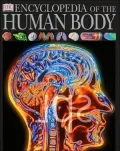
A visually stimulating encyclopedia that explore and explains the workings of the human body. Providing comprehensive support for school children as well as a useful family guide for understanding how the body works, the Encyclopedia of the Human Body is a spectacular reference for young readers. Packed with bold illustrations and easy-to-follow text, the most difficult anatomical concepts, from skeletal and muscular systems to the digestive and reproductive organs, are now simple and easy to understand.
Editorials
Publishers Weekly
Presented in signature DK style, Encyclopedia of the Human Body, edited by Richard Walker, offers a detailed look (via microscope and X-ray, too) at this most amazing creation, and includes the reproductive system (which is not included in From Head to Toe, above). "Working Parts" and "Moving Framework" (which covers the skeletal system, muscles and joints) are among the volume's seven sections. Later sections focus on nutrition, exercise and organ function. "The Body Through Time" considers human evolution, public health and modern medicine.Children's Literature
This fast-paced, fact-packed book touches on everything from anatomy to the zygomatic bone. The book introduces numerous topics and explores them in great depth, highlighting the human body's construction, support, movement, control, maintenance, reproduction, and aging. The final chapter traces medical history from earliest man to the present age. The encyclopedia avoids confusing medical terminology, employing well-defined vocabulary instead. A glossary and medical timeline at the book's end help readers with unfamiliar terms. Richard Walker presents material in short article form with generous use of visual aids to support the text. The pages are awash with colorful photographs, scans, diagrams, and tables in a successful effort to engage the reader. This book is appropriate for elementary and middle school students. The enjoyable text and amazing illustrations make reading about the human body a fun adventure. 2002, DK Publishing, Ages 8 to 14.— Rachael Creager
VOYA
This volume has everything one would expect from this publisher: great photographs and illustrations, an eye-catching format, and thorough coverage of every topic introduced. The article authors are well-known children's writers or medical editors. The book begins with the tiniest building blocks, cells and DNA strands, and then covers every major body system with dynamic illustrations, cross-sections, and a consistently readable text. Small sidebars provide biographical sketches and historical perspectives throughout the text. Additional coverage on topics such as the senses, diseases, genetics, blood, nutrition, life stages, and alternative medicine are helpful. There is a brief chapter on the history of medicine and anatomical discoveries, complete with a time line that examines how ancient men and Renaissance innovators studied and understood body functions. The index is accurate and comprehensive. If it is an issue, the chapter on the reproductive system is presented clearly, but without what some might label explicit illustrations. For the price, this accessible, highly readable reference is a bargain for both adult and juvenile collections. Glossary. Index. Photos. Chronology. 2002, DK, 304p, BeachSchool Library Journal
Gr 5 Up-This profusely illustrated volume contains 116 entries divided into 5 categories: "Working Parts," "Moving Framework," "Control and Sensation," "Supply and Maintenance," and "New Generations." Within these sections each spread takes a closer look at an aspect of the topic ("Cells," "Cell Structure," "Cell Chemistry," etc.). Almost 900 clearly labeled and captioned full-color illustrations, photographs, models, diagrams, and electron micrographs are incorporated into this work. Useful reference sections at the end include "The Body Through Time," which discusses the evolution of the human body and medical practices, techniques, and discoveries since ancient times; a time line of significant events from 100,000 B.C.E. to the present; and a glossary of nearly 300 scientific terms. The book concludes with an essential index. David Burnie's similar The Concise Encyclopedia of the Human Body (DK, 1995) is easier to navigate for younger students, and has useful biographical sketches and tables of infectious and noninfectious diseases not included in this expanded work. The attractive layout and terrific illustrations in Walker's book will appeal to information seekers and browsers alike.-Shauna Yusko, King County Library System, Bellevue, WA Copyright 2003 Cahners Business Information.Book Details
Published
August 7, 2003
Publisher
New York : DK Pub., c2002.
Pages
304
Format
Hardcover
ISBN
9780789486721