
Economics, Discrimination & Prejudice, Immigration & Emigration
Log in to track your reading progress.
Overview
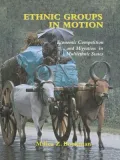
"During a single month in the year 2000, the following seemingly unrelated events occurred across the world. In Kosovo, Serbs and Albanians continued to evict each other from their respective homes. In China, the regulation of internal migration by the central authorities was being considered as Uygur Muslims protest against the reins on their mobility. In Austria Jorg Haider of the Freedom Party came to power advocating the repatriation of immigrants from Eastern Europe. In the United States, Alan Greenspan, chairman of the Federal Reserve, testified before Congress that it may be necessary to loosen immigration regulations to enable foreign labour to satisfy the demands of the growing US economy. These events share a common denominator, namely the movement of populations. Whether voluntary or involuntary, induced or restricted, domestic or international, large-scale population movements are a feature of the world at the turn of the new millennium." Ethnic Groups in Motion focuses on one aspect of migration, namely its ethnic competition. Rather than observe population movements in general, this study is limited to the movements of specific ethnic groups. It explores the role played by ethnicity in determining which groups move and which groups stay, and contributes to the dialogue on the resolution of interethnic conflict by exploring several chains in the link between harmony and disharmony.Synopsis
This title focuses on one aspect of migration, namely its ethnic competition. Rather than observe population movements in general, the study is limited to the movements of specific ethnic groups. It explores the role played by ethnicity in determining which groups move and which groups stay.Editorials
Booknews
Examining the role played by ethnicity in determining whether certain groups migrate or not, Bookman (economics, St. Joseph's U.) argues that ethnic variations follow from interethnic economic competition for scarce resources. She examines three variables in her exploration of the relationship between economic competition and migration, namely economic change, freedom of choice, and discriminatory policy. She suggests that during periods of economic decline, interethnic competition sharpens; that this competition affects both voluntary and involuntary migration; and that dominant groups often institutionalize discriminatory policies that influence migration in a variety of ways. Distributed in the US by ISBS. Annotation c. Book News, Inc., Portland, OR (booknews.com)Book Details
Published
December 6, 2012
Publisher
Taylor & Francis
Pages
244
Format
Hardcover
ISBN
9781136342677