
School Libraries, Special Libraries & Special Collections, Study & Teaching of Science, Teaching - Science & Technology, Elementary Education
Available on Bookshop
Write a review
Books.org participates in affiliate programs including Bookshop.org and the Amazon Services LLC Associates Program. We may earn a commission from qualifying purchases made through links on this page, at no additional cost to you.
Log in to track your reading progress.
Overview
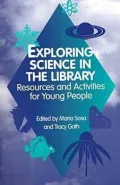
Helps public and school librarians develop skills in science, mathematics, and technology. Reviews concepts central to science education reform, and tells how to select science books for children. Discusses use of children's literature to meet science standards, gives advice on selecting videos and software, and offers ideas for activities in the library. Sosoa is editor-in-chief of , and project director for the Science and Literacy for Health Project; Gath is editor of SB&F Online. Annotation c. Book News, Inc., Portland, OREditorials
KLIATT
"Intended to help public and school librarians develop and enhance their skills in science, mathematics, and technology," this volume is full of suggestions for promoting science through library resources and activities. The first chapter, by Jerry Bell of the American Association for the Advancement of Science, looks at science, math, and technology educational reform. The next three chapters, by people associated with Science Books and Films, discuss selecting science books, trade books, and media (video and software), with helpful bibliographies. Chapter 5 talks about using the Internet to develop science literacy, with a list of over 100 Web sites, while Chapter 6, on inquiry-based learning, offers suggestions for hands-on science activities that can be done in the library. A chapter on fund-raising for such activities follows, along with one on forming home, school and community partnerships to promote them. The final chapter, on "Science Project Ideas for Libraries and School Media Centers," summarizes 47 projects from across the country. Useful for any librarian looking to encourage science literacy. 2000, ALA, 236p, bibliogs, index, 23cm, 99-41496. $32.00; members, $28.80. Ages Adult. Reviewer: Paula Rohrlick; September 2000 (Vol. 34 No. 5)VOYA -
This useful resource provides public and school librarians with information for obtaining materials for the advancement of science education. All librarians need to be knowledgeable about Project 2061, designed by the American Association for the Advancement of Science (AAAS) to define the science that students through twelfth grade should know and understand. Current reform efforts in science and mathematics education depend upon the widespread availability of reliable sources. This work not only helps define the role of the librarian with regard to the standards set forth by the AAAS but also offers ideas for forming partnerships between the science community and the library. The use of a variety of instructional materials and sources is encouraged. Each chapter helps identify substantive scientific publications and educational materials for K-12 levels. Other chapters describe the use of various guidelines for the selection of quality sources. Bibliographical listings, some with annotations, also are available in many of the chapters. Suggestions for simple activities to encourage scientific inquiries and tips for guiding the learning experience are designed to meet the new standards. Criteria developed by educators and professional educational organizations for evaluating Web sites for content and credibility is given, as well as sites that have met their specified requirements and that have established high national benchmarks. This resource, which brings librarians and science educators together, is highly recommended for the professional shelf. Index. Biblio. Appendix. 2000, ALA Editions, Ages Adult, 236p, $32 Oversize pb. Reviewer: Linda GarciaSchool Library Journal
This excellent resource helps public and school librarians develop science, math, and technology resources for K-12 students, supporting the recent national efforts toward achieving science literacy. Much of the material is updated from Great Explorations: Discovering Science in the Library (AAAS, 1995). Chapters discuss education reform, collection development, videos and software, and using children's literature to meet National Science Standards (with an annotated bibliography of 75 books). Internet sources; inquiry-based learning activities; and suggested partnerships among libraries and schools, families, and communities are also included. A chapter on fund-raising to support science activities in libraries lists Web sites, addresses for corporate and government sponsors, and strategies for proposal writing. The final chapter describes 47 science projects conducted by libraries throughout the country. An extraordinarily useful book.-Joan Hamilton, Pierce School, Brookline, MA Copyright 2000 Cahners Business Information.Book Details
Published
February 28, 2000
Publisher
Chicago : American Library Association, 2000.
Pages
236
Format
Paperback
ISBN
9780838907689