
General & Miscellaneous Art, Sociology, Film History & Criticism, Fashion & Costume - History, Art by Subjects
Log in to track your reading progress.
Overview
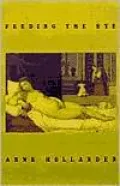
Since the advent of cinema, visual art has tended to be perceived as if it were in motion. Artists now create less often in fresco or carved stone and more on film and tape, on the dance stage, or in the ever changing, ever moving medium of clothes.
In this remarkable collection, Anne Hollander ranges over art of the twentieth and other centuries with unusual depth of historical insight to explore these rich, diverse visual treasures and the underlying themes that connect them.
Editorials
Los Angeles Times Book Review
A volume that sparkles with insight, learning and cohesiveness.Publishers Weekly -
An essayist in the most balanced, dignified and old-fashioned sense, Hollander (Sex and Suits) presents 31 essays on film, fashion and art. The subtitle of the collection is more than a little deceiving, as most of the pieces included here are extended reviews or analytical sketches reprinted from such venues as the London Review of Books, the New Republic and the New Yorker. Organized around the notion that "artists make art by absorbing the effects of other artists' productions, transmuting them through a personal creative effort influenced by circumstances and then rendering a newly shaped thing back into the continuing stream," these pieces offer superb evidence of Hollander's intellectual confidence with subjects as diverse as Yves St. Laurent, Greta Garbo, and Caspar David Friedrich (among many, many others). Hollander never seems to meet an object of fashion that doesn't merit extensive critical treatment, but she brings generous, original insight to such topics as corsets, kimonos and body-decorating rituals. A review of a Chaplin biography leads her to one of the collection's most provocative connections, that between the expatriate English silent-film tramp and George Balanchine, the Russian emigr ballet choreographer (there is also a separate Balanchine essay). Hollander's style can be a touch too precise, too effortlessly learned, but she has a genius for zippy phrasemaking, as when she writes in "Accounting for Fashion," a book review that ran in Raritan in 1993, that a dress "requires opposable thumbs and some kind of cosmology." That might not be Diana Vreeland talking, but it is her slightly more book-learned, and exquisitely well-spoken sister. (Oct.) Copyright 1999 Cahners Business Information.Library Journal
Hollander (Sex and Suits and Moving Pictures) is noted for her fascination with the concept of motion in visual art forms, but she should also be recognized for her remarkable knowledge of an array of artistic disciplines. In this rich collection of essays, she writes about the impact on modern culture of a variety of visual forms--from dance (George Balanchine, Isadora Duncan), clothing (Chanel, Yves St. Laurent), and film (Chaplin, Garbo) to body decoration, transvestism, Impressionism, and flowers. In her detailed and well-documented text, she makes observations about the style, development, and artistic contributions (sometimes controversial) of each of her subjects, offering insight into the visual aesthetics of modern culture. This unique perspective on the nature of artistic experience should be a welcome addition to art/humanities collections in academic and public libraries.--Carol J. Binkowski, Bloomfield, NJ Copyright 1999 Cahners Business Information.Kirkus Reviews
What might have been an unstable mix of essays and reviews on a variety of art forms—dance, film, fashion, and painting—instead coalesces into a thematically sound and richly varied collection. Critic Hollander (Sex and Suits: The Evolution of Modern Dress, 1994) knows how to link subjects—even those that seem to bear little or no relation to one another—by isolating underlying themes and teasing them to the legible surface. Which is not to say that she manipulates her material; she simply remains true to her priorities as a critic. And her work benefits. In this latest collection, Hollander takes pains to assert that artists are increasingly working in mediums that reflect movement. Well, maybe, but her assertion functions largely as an excuse to indulge her own abiding fascination with clothing, costuming, and the intersection between artist and physical environment. Those obsessions seem reason enough to group these pieces together, especially since they're all imbued with Hollander's intellectualism. Expert and deeply informed, she examines fellow authors' work with considerable thoroughness—reading her can feel like eavesdropping on a passionate, if somewhat biased, debate. In her review of Mark Anderson's book Kafka's Clothes, she lauds his ability to combine serious literary criticism with a discussion of 19th-century attire. "Clothes have always made useful literary metaphor (language is the dress of thought and so on)," she writes, "they have also offered a useful descriptive device for most novelists, however surreal their vision." Thus Gregor Samsa, "the fearsome beetle, clad in his functional carapace," becomes "the new-made Modern Artist." Thiscontact point at which the artist's very body meets the outer world—and is mediated by clothing or costuming—always sparks Hollander's interest. And she brings a vital freshness and droll sense of humor to subjects that seem possibly trite, like the wearing of black, androgynous fashions, even tight-lacing corsets. While Hollander's intellectualism may verge on the academic, her passion for exploring the symbolism of art and clothing is anything but.Book Details
Published
October 1, 1999
Publisher
Farrar Straus Giroux
Pages
352
Format
Hardcover
ISBN
9780374282011