
Mayors - U.S. Political Biography, Midwest State & Local Government, Illinois - State & Local History, Fiction - Historical People, Fiction - General & Miscellaneous
Log in to track your reading progress.
Overview
Louisa May Alcott is fascinated by her Concord neighbor Henry David Thoreau. He carries a flute in his pocket and a pencil behind his ear, and he takes the children of the town on nature excursions.Writing is difficult for Louisa, so she admires the way Mr. Thoreau can jot down a few lines in his notebook when a thought occurs. Through their friendship, will Mr. Thoreau be able to help Louisa find her own inspiration?
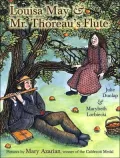
The exquisite woodcuts of Caldecott Medal winner Mary Azarian transport readers to nineteenth-century Massachusetts to discover a friendship between two of America's most beloved authors, and their search to find their own inner voices.
In nineteenth-century Concord, Massachusetts, seven-year-old Louisa May Alcott joins other local children on the varied excursions led by teacher and naturalist Henry David Thoreau, and is inspired to write her first poem.
Editorials
Publishers Weekly
Azarian's (From Dawn Till Dusk, reviewed above) ever-glorious hand-tinted woodcuts are just part of the attraction of this picture book, a fictionalized account of an episode in writer Louisa May Alcott's childhood. Called "my wild Louisa" by her father, eight-year-old "Louy" rebels against the strictures of a seemingly endless round of chores and studies (particularly writing). So when neighbor and teacher Henry David Thoreau gathers local children for Saturday field trips, Louy is champing at the bit to go. The outings open her eyes to the wonders of the natural world, and also make her curious about her teacher, who plays haunting flute music and frequently jots things down in his notebook. The trips halt when winter arrives and, wondering "What would Mr. Thoreau do if he were boxed inside?," Louy thinks of writing, but "words seemed trapped inside her, like fish under ice." Then spring arrives and, with it, inspiration, as Louy discovers "her own inner music" and pens her first poem, which "seemed as beautiful as the notes from Mr. Thoreau's flute." Authors Dunlap (Eye on the Wild: A Story About Ansel Adams) and Lorbiecki (Sister Anne's Hands) blend historical facts with a lyrical, engaging story line anchored by the spunky Louisa. Azarian's artwork illuminates the 19th-century setting, detailing the sparsely beautiful New England interiors as well as the lush landscape near Walden Pond. A compelling introduction to the author of Little Women, this fine book also features a prologue and afterword that provide further information about the Alcott family and Thoreau. Ages 5-up. (Sept.)School Library Journal
Gr 3-5-A headstrong eight-year-old Louisa May Alcott and her friends take blissful Saturday treks into the Massachusetts countryside with their neighbor, Henry David Thoreau. When he plays his flute, Louy is enchanted, not caring a bit about the man's reputation as a "dreamer and a loafer." For Louy, who struggles against society's role for girls, these outings are exhilarating, perhaps even life-changing encounters, however brief. Readers experience her exasperation with the duties of her constricting family life, and cheer as her world starts to open up. Based on actual events gathered from journals and other writings of both authors and their families and acquaintances, the story is shaped into a plausible narrative that explains the roots of Alcott's creative writing development. The narrative is compelling, opening with a daring episode that begins the portrait of a bold young girl. Azarian's spectacular woodcuts provide a perfect complement to this inspirational story. The images lend historical flavor, clearly depicting a simpler time. Exquisite designs, particularly in the clothes and water images, pull readers in and create a dramatic, almost three-dimensional effect. Together, the authors and the illustrator have created a historically accurate, noteworthy book that illuminates the lives of these two important American writers. It just might lead a new generation of readers to their works.-Lee Bock, Glenbrook Elementary School, Pulaski, WI Copyright 2002 Cahners Business Information.Kirkus Reviews
The authors embroider historical encounters into a speculative account of the awakening of a writer's gift. In seven-year-old "Louy" Alcott's eyes, fellow Concord resident Henry Thoreau cuts a glamorous figure, a wild-haired young teacher given to taking children on expeditions into the surrounding woods, and to playing haunting melodies on his flute. Escaping as often as she can from her strictly regulated household, Louisa learns ways of seeing the natural world from Mr. Thoreau as she watches him write in his journal, and struggles to reproduce the melodies that run through her head. For her, however, " . . . there was nothing to write about. Only endless tasks and doing your duty . . . Words seemed trapped inside her, like fish under ice." That ice breaks, though, along with the Concord River's ice, when the sight and sound of a spring robin frees her first poem: "Welcome, welcome little stranger. / Fear no harm, and fear no danger . . . " Louisa looks considerably older than seven in Azarian's (The Race of the Birkebeiners, 2001, etc.) hand-colored woodcuts, but the illustrations' folk-art style artfully evokes the era in which the tale is set, and the crisply distinct patterns on clothing, tree trunks, and water create a harmonic interplay of textures. Though this does introduce two of American greatest authors, it's more about writing than particular writers, more about living than particular lives. (foreword, afterword, source note) (Picture book. 7-9)Book Details
Published
June 18, 1980
Publisher
New York : Dial Press, c1980.
Pages
32
Format
Hardcover
ISBN
9780803724709