
Marriage - Biography, Editors, Publishers, Agents, & Booksellers - Literary Biography, General & Miscellaneous News & Media Biography
Available on Bookshop
Write a review
Books.org participates in affiliate programs including Bookshop.org and the Amazon Services LLC Associates Program. We may earn a commission from qualifying purchases made through links on this page, at no additional cost to you.
Log in to track your reading progress.
Overview
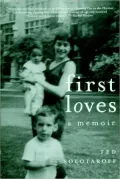
First loves tells of a life driven by the twin lusts of romantic love and writing. A legendary editor and literary critic, Ted Solotaroff takes the reader over the rocky course of his education and rebellion in the '50s and through an early marriage that commutes between heaven and hell. Like Truth Comes in Blows, his widely acclaimed previous memoir, First Loves speaks to the simple, profound question: What's your story? Solotaroff's response is naked and nuanced, a startling Bildungsroman. Solotaroff begins with the first sighting of Lynn, emerging from the ocean as if from his heart. Though all too real, she continues to tantalize and torment him in the years that follow. The young couple make their way through Ann Arbor, Greenwich Village, Berkeley, and the University of Chicago, seeking a radical/bohemian haven in the '50s -- the age of "the fat gods," as Saul Bellow put it -- and finding madness, struggle, and unexpected fulfillment in myriad forms. Solotaroff encounters the Henry Wallace movement, the Ezra Pound controversy, McCarthyism, and the transformation of the University of Chicago, and participates in the emergence of the American-Jewish writers. His portraits of Bernard Malamud, Leslie Fiedler, Norman Maclean, Philip Roth, and Norman Podhoretz are, like everything in these pages, alive with the directness and clarity of genuine insight. First Loves is a feat of private honesty from a public intellectual in the making.Synopsis
The memoir of a prominent literary critic and—as is here revealed—a disappointed lover.
The Los Angeles Times
Welcome to Solotaroff's world, full of lust, craving and camaraderie; surprisingly free of bitterness and sweetened by regret. — Susan Salter Reynolds
Editorials
The Los Angeles Times
Welcome to Solotaroff's world, full of lust, craving and camaraderie; surprisingly free of bitterness and sweetened by regret. — Susan Salter ReynoldsThe New York Times
Solotaroff's marital complaints can sound whiny, but his depiction of Lynn's never-ending battle with manic-depressive illness is wrenching. And his cameo portraits of Philip Roth, Bernard Malamud, Norman Maclean and Norman Podhoretz, among other literary figures, are sharp and insightful. — Diane ColePublishers Weekly
The loves alluded to in the title of this unflinching but amiable follow-up to the critically lauded Truth Comes in Blows are both romantic and intellectual. Both loves are imperfect, but with Solotaroff-who founded American Review-as navigator, they are fascinatingly so. The bewitching Marilyn Ringler and Solotaroff met in 1948 when they were working at a Jewish resort on Long Island. "I was nearly twenty, two months out of the navy, and hadn't had much luck with girls whom I didn't pay," Solotaroff declares in a confession that's typical for this public intellectual more bemused than wracked by the recollection of his younger days. There were considerable mistakes and woes early on, although he has crafted another memoir that is admirably shorn of remorse. Solotaroff indulgently embarked on a career as a writer even though the signs were neon-bright that his talent lay in criticism. After Solotaroff and Lynn, as he calls her, married, Lynn began seeing rats and ghosts at night. Moving to New York for the mangy bohemian life he'd fantasized about, Solotaroff became a scrappy laborer as the couple, "so uncannily tuned in to each other" out of the bedroom, were forced to grapple with their sexual incompatibility. They eventually had two children, and Solotaroff settled down to life as a critic. Although he has a tendency to compare nearly everyone in his memoir to major literary figures ("Elizabeth reminded me of Virginia Woolf"; "I was on the way to becoming a younger version of Leopold Bloom"), Solotaroff manages to imbue all of them with full humanity. (June 26) Copyright 2003 Reed Business Information.Kirkus Reviews
Noted editor Solotaroff picks up where Truth Comes in Blows (1998) left off, describing with compassionate acuity the difficult early adult years that led to his vocation as a literary journalist. He begins in the summer of 1948, when the 19-year-old Navy veteran meets Lynn Ringler, "a glowing girl with a sexy-arty look and a brooding inner life." Their romance is bumpy during his first two years as an undergraduate at Ann Arbor, and even after they marry, in 1950, she’s prone to severe depression, not helped by their bumpy sex life and Solotaroff’s uncertainty about whether he should commit himself to fiction (at which several friends tell him he’s not so hot) or a scholarly career, for which he is better suited but unenthusiastic. Two sons, his graduate work at the University of Chicago, and extreme poverty further strain their relationship, which Solotaroff analyzes candidly and, insofar as an outsider can judge, fairly. He writes with equal vividness and perception about mid-20th-century academic stars (Morton Dauwen Zabel, Leslie Fiedler) and ordinary folks (an East Chicago working-class student provides the most moving scene). The best portions here, though, delineate the author’s struggle to reconcile his need to make a living, which a university professorship can provide, with his love for the exciting new literature being published by writers like Saul Bellow, Bernard Malamud, and grad-school pal Philip Roth. Their work demonstrates that the ethnic origins Solotaroff shares could be the stuff of great fiction, though he is increasingly aware he will not be the one writing it. Then an essay on Roth leads to an article about Jewish-American writers in The Times Literary Supplementand lunch in New York with Norman Podhoretz, who offers him a job as associate editor at Commentary. The die is cast, but his marriage survives only two more years. Meets the very high standard set by Alfred Kazin’s Starting Out in the Thirties for describing a young man’s intellectual coming-of-age with nuanced honesty and genuine emotion. Let’s hope Solotaroff doesn’t take five more years to get to New American Review. Author tour. Agent: Georges BorchardtBook Details
Published
August 1, 2004
Publisher
Seven Stories Press
Pages
304
Format
Paperback
ISBN
9781583226407