
United States - 21st Century - History, Fire Fighting & Rescue, Careers & Occupations - General & Miscellaneous, Violence, War & Terrorism
Log in to track your reading progress.
Editorials
VOYA
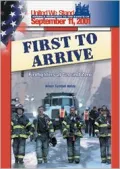
Books in this series, "United We Stand: America Responds to the Events of September 11, 2001," begin and end with a particular agency's involvement with the crisis of September 11. The pages between detail the agency's history and involvement with other key events, and describe job requirements, training, work environments, specializations within each career, special equipment related to each agency's work, and accompanying stresses and rewards. Resources for further information include Web sites, organizations and agencies, and books. The bibliographies are extensive, and the indexes are comprehensive. Sidebars highlight various "Tools of the Trade" and large color photographs provide glimpses of the realities surrounding the work of those who rise to meet crisis head-on. Call to Rescue, Call to Heal focuses on emergency medical professionals, offering an intriguing mix of personal interest stories with interviews and background information through Peltak's brisk-paced writing. The opening chapter is filled with riveting first-person accounts of the events of that September morning. SWAT medic teams "not only wear bulletproof vests but have training in battlefield medical techniques." Illustrative of the fact that medics often arrive before the police, Peltak cites the Chicago EMT who "had a gun held to his head because the victim's friend didn't think he was working fast enough." The writing is often awkward or confusing, however, and would have benefited greatly from more careful editing. In contrast, First to Arrive presents firefighters, now nationally recognized as symbolizing "heroism and selflessness," in a more formal, less personalized style. The opening chapter detailingfirefighters' involvement with the events comprises a scant three pages compared to the nine-page first chapter of the previous book and offers much potentially fascinating information, albeit in a textbook fashion. For example, the story and accounts of the fire at the Triangle Shirtwaist Company in New York City in which many young women perished is introduced by the sentence, "New York had a great fire tragedy in the early 1900s." One chapter describes the work of smokejumpers, who parachute into remote or inaccessible areas to fight fires, and the role of dogs in finding human survivors or in arson investigations. Although Kelley's writing is clear, it misses an opportunity to connect young readers with the personal stories of what is currently a high-profile occupation. Index. Photos. Biblio. Further Reading. VOYA Codes: 3Q 3P M J (Readable without serious defects; Will appeal with pushing; Middle School, defined as grades 6 to 8; Junior High, defined as grades 7 to 9). 2003, Chelsea House, 64p. PLB— Kim Carter
School Library Journal
Gr 5-7-These representatives of a multivolume series combine superficial treatments of narrow topics, thinly disguised padding, recycled information, and signs of careless editing. In First to Arrive, only the first and last of the seven chapters deal with events on or following September 11; the rest is a skimpy overview of the history of firefighting in America, plus a modern firefighter's training and special equipment. Helping Hands, the best of the lot, stays on topic with general accounts of government, corporate, and personal efforts to assist rescue workers and victims in the disaster's immediate wake. However, some of its claims, such as the assertion that steel softens at a higher temperature than it melts, or that President Bush "emerged as a strong and confident leader" in the wake of the attacks, are, at best, debatable. Similarly, though We the People is balanced enough to take note of protests to the federal government's sweeping post-9/11 assaults on civil liberties, Valdez's belief that the anthrax letters were "the first fatal instance of biological terrorism on U.S. soil" ignores, for instance, the smallpox and other epidemics that wiped out entire tribes of Native Americans in centuries past. All three titles feature occasional small color photos. Considering how thoroughly the territory is being mined, libraries should gauge local demand carefully, and if possible wait for more considered accounts of the 2001 attacks' aftermath.-John Peters, New York Public LibraryBook Details
Published
August 15, 2002
Publisher
Chelsea House Publishers
Pages
64
Format
Binding
ISBN
9780791069578