
British Armed Forces - Biography, World War I - General & Miscellaneous, Great Britain - Royal Air Force, World War I - War Narratives, Aerial Operations - World War I, British History - Military History
Available on Bookshop
Write a review
Books.org participates in affiliate programs including Bookshop.org and the Amazon Services LLC Associates Program. We may earn a commission from qualifying purchases made through links on this page, at no additional cost to you.
Log in to track your reading progress.
Overview
Following the Allied breakout from the Normandy beachhead in July 1944, the vaunted German Army seemed on the verge of collapse. As British and US forces fanned out across northwestern France, enemy resistance unexpectedly dissolved into a headlong retreat to the German and Belgian borders. In early September an elated Allied High Command had every expectation of continuing their momentum to cripple the enemy's warmaking capability, by capturing the Ruhr industrial complex and plunging into the heart of Germany. After a brief pause to allow for resupply, Courtney Hodge's First Army prepared to punch through the ominous but largely outdated Westwall (Siegfried Line) surrounding Aachen. During the lull in combat operations, however, German commanders such as the "lion of defense," Walter Model, continued to reorganize depleted units and mount an increasingly potent defense. Although the German Replacement Army funneled considerable numbers to the front, they all too often strained an overburdened supply system and did not greatly enhance existing combat formations. More important was that the panzer divisions, once thought irretrievably destroyed, were resupplied and reinvigorated. When the Allied offensive resumed it ran into a veritable brick wall-gains measured in yards, not miles, if any were made at all.While combatants from both sides suffered equally in an urbanized environment of pillbox-infested hills, impenetrable forests, and freezing rain, the Germans were on the defensive and better able to inflict casualties out of proportion to their own. For the US First Army, what was originally to be a walk-through turned into a frustrating six-month campaign that decimated infantry and tank forces alike. The "Broad Front," as opposed to a "Schwerpunkt" strategy, resulted in the demise of many a citizen-soldier. Drawing on primary Wehrmacht and US sources, including battle analysis and daily situation and after-action reports, The Roer River Battles provides insight into the desperate German efforts to keep a conquering enemy at the borders of their homeland. Tactical maps down to battalion level help clarify the very fluid nature of the combat. Combined, they serve to explain not just how, but why decisions were made and events unfolded, and how reality often differed from doctrine in one of the longest US campaigns of World War II.
Synopsis
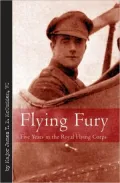
The day-to-day insights of a brilliantly daring World War I ace that only ends with his death at the age of 23 . . . James McCudden was an outstanding British fighter ace of World War I, whose daring exploits earned him a tremendous reputation and, ultimately, an untimely end. Here, in this unique and gripping firsthand account, he brings to life some of aviation history’s most dramatic episodes in a memoir completed at the age of twenty-three, just days before his tragic death. During his time in France with the Royal Flying Corps from 1914 to 1918, McCudden rose from mechanic to pilot and flight commander. Following his first kill in September 1916, McCudden shot down a total of fifty-seven enemy planes, including a remarkable three in a single minute in January 1918. A dashing patrol leader, he combined courage, loyalty, and judgment, studying the habits and psychology of enemy pilots and stalking them with patience and tenacity. Written with modesty and frankness, yet acutely perceptive, Flying Fury is both a valuable insight into the world of early aviation and a powerful account of courage and survival above the mud and trenches of Flanders. Fighter ace James McCudden died in July 1918, after engine failure caused his plane to crash just four months before the end of World War I. His success as one of Britain’s deadliest pilots earned him the Victoria Cross.Book Details
Published
October 19, 2009
Publisher
Casemate Publishers
Pages
288
ISBN
9781935149750