
Gravity in Physics, Power & Energy, Astronauts & Space Flight, Physics
Available on Bookshop
Write a review
Books.org participates in affiliate programs including Bookshop.org and the Amazon Services LLC Associates Program. We may earn a commission from qualifying purchases made through links on this page, at no additional cost to you.
Log in to track your reading progress.
Overview
Forces are at work all around you. They affect things as small as a toy car and as big as the earth! Forces make things move, but they also make things stop. Some forces are very strong, but other forces are so weak, you can't feel them at all. But what are forces, and how do they work? Read and find out!
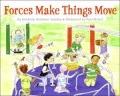
Simple language and humorous illustrations show how forces make things move, prevent them from starting to move, and stop them from moving.
Editorials
Kirkus Reviews
Simple language and appealing illustrations combine to elucidate the tricky concept of force in this solid Let's-Read-and-Find-Out offering. Bradley's narrative builds in complexity from the simple to the sophisticated to discuss reciprocal forces, friction and gravity-including a nicely comprehensible explanation of the gravitational force that exists between any two objects, not just the earth's. The reader takes the position of experimenter with a direct second-person address, using universally kid-friendly examples to illustrate Newtonian physics: "If you push a toy car, it pushes back against you with the exact same force. . . . If you push the toy car, your force makes the car start moving. So if the toy car is also pushing you, why don't you start moving? Because you are so much heavier than a toy car." Meisel's happily multicultural cartoon cast of kids puts toy cars, real cars and big brothers through a variety of scenarios, in a visually harmonious accompaniment to the text. A concluding spread introduces an activity that will allow kids to test differing amounts of friction-using toy cars, of course. (Picture book/nonfiction. 5-9)Book Details
Published
August 1, 2005
Publisher
HarperCollins Publishers
Pages
40
Format
Hardcover
ISBN
9780060289065