
Jurisprudence, Witnesses, Criminology - Sex Crimes, Emergency & Critical Care, Forensic Medicine, Health Law - Medical Law & Legislation
Log in to track your reading progress.
Overview
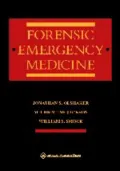
Written by the foremost experts in forensic clinical medicine, this volume is the first book in this new subspecialty. The text provides the information emergency physicians and residents need about the medicolegal aspects of treating victims of sexual assault, child abuse, elder abuse, and domestic violence. It offers detailed guidelines on interviewing and examining the victim and collecting, preserving, and documenting evidence for legal proceedings. This text includes an insightful chapter on expert testimony written by a physician with a law degree, as well as a chapter on forensic photography and a chapter by an FBI agent on perpetrators.
A Brandon-Hill recommended title.
Editorials
Reviewer: Leslie Zun, MD(Mt. Sinai Hospital Medical Center)
Description: This is an excellent reference to fill the knowledge gap of emergency physicians in the area of forensic emergency medicine. Diverse, but rather complete content is provided including a chapter on forensic photography.
Purpose: The authors intended to provide a reference on the new field of forensic emergency medicine. For the most part, they have met all of their objectives and more.
Audience: The book is written primarily for practicing emergency physicians. The authors assembled a diverse group of contributing authors.
Features: "A number of subject areas are covered. Unique areas covered include interviewing techniques, description of perpetrators, testifying, law enforcement, and photography. The book has a limited number of wonderful photographs. The only shortcomings are the lack of information on failure to thrive in children and a limited description of victims of violence. "
Assessment: This is a wonderful addition to an emergency medicine library and should find its place next to the color atlas on child abuse and assault. It fills a number of gaps on the literature of emergency medicine.
Booknews
Provides emergency physicians with information necessary to perform essential tasks for the recognition, evaluation, treatment, documentation, and understanding of victims of acts of violence, abuse, or neglect. The 13 chapters describe the victim services immediately available in most jurisdictions: child and adult protective services, social workers, sexual assault nurse examiners, and police forensic technicians. In addition, the contributors discuss relevant aspects of the legal system, and provide guidance to medical personnel on testifying in court. Topics include perpetrators, interviewing techniques, forensic examination of victims and perpetrators of sexual assault, elder abuse, law enforcement, and forensic photography. Annotation c. Book News, Inc., Portland, OR (booknews.com)3 Stars from Doody
Book Details
Published
May 29, 2001
Publisher
Philadelphia : Lippincott Williams & Wilkins, c2001.
Pages
320
Format
Hardcover
ISBN
9780781731447