
Military History, Children - Social Studies, Historical Biography, Children - History, Children - Biography, Jewish - Biography, Jewish History, World War II
Log in to track your reading progress.
Overview
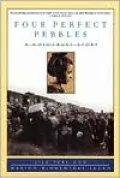
If she could find four perfect pebbles of almost exactly the same size and shape, it meant that her family would remain whole. Mama and papa and she and Albert would survive Bergen-Belsen. The four of them might even survive the Nazis' attempt to destroy every last Jew in EuropeEditorials
Elie Wiesel
Personal memoirs have no equal in their weight of truth and memory—[Marion Blumenthal Lazan's] have educated so many.Publishers Weekly -
Amid a growing number of memoirs about the Holocaust, this book warrants attention both for the uncommon experiences it records and for the fullness of that record. Marion Blumenthal was not quite five years old in 1939 when her family fled Germany for Holland, ending up in the relative safety of Westerbork, then a refugee camp run by the Dutch government. They had visas for the U.S. and tickets for an ocean crossing, but during a fatal three-month postponement of their sailing, the Germans invaded Holland. By 1944 the Blumenthals arranged to be part of a group bound for Palestine in exchange for the release of German POWs; the family was instead sent to Bergen Belsen, where they remained, together, in the so-called Family Camp. Marion, her brother and parents survived the war, but her father died of typhus several months after liberation. Written in the third person, the book lacks the searing intensity of such memoirs as Ruth Sender's The Cage or Isabella Leitner's The Big Lie, also for this age group, but it is unusually complete, not only in its skillful presentation of the historical context but in its treatment of the Blumenthals' horrifying journey. Quotes from Lazan's 87-year-old mother are invaluable-her memories of the family's experiences afford Marion's story a precision and wholeness rarely available to child survivors. Ages 10-up. (Mar.)School Library Journal
Gr 6-10-A harrowing and often moving account of the co-author's family's struggle to survive the Holocaust. Opening in Bergen-Belsen, the story retraces the events leading up to the Blumenthals' imprisonment there. After Marion's grandparents died, she, her brother, and parents left Germany for Holland to wait for a visa that would allow them to come to the U.S. Their papers came, but sailing was delayed and Hitler invaded Holland. The Blumenthals then applied to join a group that was to be sent to Israel in exchange for German POWs. Soon after arriving in Bergen-Belsen, however, they realized that they would not be exchanged. They survived the camp and their family remained intact. Ironically, Mr. Blumenthal died of typhus shortly after liberation. After three years as displaced persons, Marion and her mother and brother finally arrived in the U.S., where there were new adjustments to be faced. The story is told only partly from Marion's point of view. More often, it is told by an omniscient narrator. This tends to remove readers somewhat from the emotional impact of the story. Chilling facts and statistics, such as a description of the poison gas "showers," read like a textbook rather than a memoir. The information is solid and well presented, however, and through its personal-narrative format the book should reach readers who might not be willing to read such titles as Milton Meltzer's Never to Forget (HarperCollins, 1976).-Louise L. Sherman, Anna C. Scott School, Leonia, NJKirkus Reviews
By the time WW II ended in Europe, the Blumenthal family—Marion, her brother Albert, and their parents—had lived in a succession of refugee, transit, and prison camps for more than six years, not only surviving but staying together, a phenomenon that Marion attributes to the power of her four lucky stones. After trying on several occasions to leave Europe, and after being shunted from camp to camp, they arrived in Bergen-Belsen, where conditions were so bad that nearly half the camp's population died of disease, starvation, exposure, exhaustion, and brutal beatings. Two weeks before the advancing Russian army reaches the camp, the Blumenthals suffered another terrible blow; they were bundled onto a train bound for Auschwitz. Only because the train was unaccountably delayed were its passengers found by the Russians and freed.This gripping memoir is written in spare, powerful prose that vividly depicts the endless degradation and humiliation suffered by the Holocaust's innocent victims, as well as the unending horror of life in the camps. It's also an ennobling account of the triumph of the human spirit, as seen through a child's eyes.
Book Details
Published
November 1, 1999
Publisher
Avon Books
Pages
144
Format
Paperback
ISBN
9780380731886