
Join Books.org — it's free

Slavery - Emancipation, Abolition & African American Civil War Participation, Slavery - Social Sciences, United States Studies - General & Miscellaneous, Political Protest & Dissent, Civil Rights - African American History, Civil War and Reconstruction -
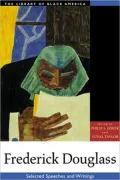
Frederick Douglass: Selected Speeches and Writings by Frederick Douglass — book cover

Frederick Douglass: Selected Speeches and Writings

by Frederick Douglass, Philip S. Foner (Editor), Yuval Taylor (Editor)
Available on Bookshop Write a review

Books.org participates in affiliate programs including Bookshop.org and the Amazon Services LLC Associates Program. We may earn a commission from qualifying purchases made through links on this page, at no additional cost to you.

Log in to track your reading progress.

Overview

One of the greatest African American leaders and one of the most brilliant minds of his time, Frederick Douglass spoke and wrote with unsurpassed eloquence on almost all the major issues confronting the American people during his life - from the abolition of slavery to women's rights, from the Civil War to lynching, from American patriotism to black nationalism.. "Between 1950 and 1975, Philip S. Foner collected the most important of Douglass's hundreds of speeches, letters, articles, and editorials into an impressive five-volume set, now long out of print. Abridged, adapted, and supplemented with several important texts that Foner did not include, Frederick Douglass: Selected Speeches and Writings presents the most significant, insightful, and elegant short works of Douglass's massive oeuvre.

Synopsis

One of the greatest African American leaders and one of the most brilliant minds of his time, Frederick Douglass spoke and wrote with unsurpassed eloquence on almost all the major issues confronting the American people during his life—from the abolition of slavery to women's rights, from the Civil War to lynching, from American patriotism to black nationalism. Between 1950 and 1975, Philip S. Foner collected the most important of Douglass's hundreds of speeches, letters, articles, and editorials into an impressive five-volume set, now long out of print. Abridged and condensed into one volume, and supplemented with several important texts that Foner did not include, this compendium presents the most significant, insightful, and elegant short works of Douglass's massive oeuvre.

About the Author, Frederick Douglass

Philip S. Foner wrote and edited over 100 books, including The Black Panthers Speak, The History of Black Americans, and the 10-volume The History of the Labor Movement in the United States. Yuval Taylor edited I Was Born a Slave: An Anthology of Classic Slave Narratives; as editor of Lawrence Hill Books, he directs The Library of Black America series. He lives in Chicago.

Biography

Frederick Augustus Washington Bailey was born a slave in Tuckahoe, Maryland, in February 1818. He became a leading abolitionist and women's rights advocate and one of the most influential public speakers and writers of the nineteenth century.

Frederick's mother, Harriet Bailey, was a slave; his father was rumored to be Aaron Anthony, manager for the large Lloyd plantation in St. Michaels, Maryland, and his mother's master. Frederick lived away from the plantation with his grandparents, Isaac and Betsey Bailey, until he was six years old, when he was sent to work for Anthony.

When Frederick was eight, he was sent to Baltimore as a houseboy for Hugh Auld, a shipbuilder related to the Anthony family through marriage. Auld's wife, Sophia, began teaching Frederick to read, but Auld, who believed that a literate slave was a dangerous slave, stopped the lessons. From that point on, Frederick viewed education and knowledge as a path to freedom. He continued teaching himself to read; in 1831 he bought a copy of The Columbian Orator, an anthology of great speeches, which he studied closely.

In 1833 Frederick was sent from Auld's relatively peaceful home back to St. Michaels to work in the fields. He was soon hired out to Edward Covey, a notorious "slave-breaker" who beat him brutally in an effort to crush his will. However, on an August afternoon in 1934, Frederick stood up to Covey and beat him in a fight. This was a turning point, Douglass has said, in his life as a slave; the experience reawakened his desire and drive for liberty.

In 1838 Frederick Bailey escaped from slavery by using the papers of a free seaman. He traveled north to New York City, where Anna Murray soon joined him. Later that year, Frederick and Anna married and moved to New Bedford, Massachusetts. Though settled in the North, Frederick was a fugitive, technically still Auld's property. To protect himself, he became Frederick Douglass, a name inspired by a character in Sir Walter Scott's poem Lady of the Lake.

Douglass began speaking against slavery at abolitionist meetings and soon gained a reputation as a brilliant orator. In 1841 he began working full-time as an abolitionist lecturer, touring with one of the leading activists of the day, William Lloyd Garrison.

Douglass published his first autobiography, Narrative of the Life of Frederick Douglass, an American Slave, in 1845. The book became an immediate sensation and was widely read both in America and abroad. Its publication, however, jeopardized his freedom by exposing his true identity. To avoid capture as a fugitive slave, Douglass spent the next several years touring and speaking in England and Ireland. In 1846, two friends purchased his freedom. Douglass returned to America, an internationally renowned abolitionist and orator.

Douglass addressed the first Women's Rights Convention in Seneca Falls, New York, in 1848. This began his long association with the women's rights movement, including friendships with such well-known suffragists as Susan B. Anthony and Elizabeth Cady Stanton.

During the mid-1840s Douglass began to break ideologically from William Lloyd Garrison. Whereas Garrison's abolitionist sentiments were based in moral exhortation, Douglass was coming to believe that change would occur through political means. He became increasingly involved in antislavery politics with the Liberty and Free-Soil Parties. In 1847 Douglass established and edited the politically oriented, antislavery newspaper the North Star.

During the Civil War, President Lincoln called upon Douglass to advise him on emancipation issues. In addition, Douglass worked hard to secure the rights of blacks to enlist; when the Fifty-fourth Massachusetts Volunteers was established as the first black regiment, he traveled throughout the North recruiting volunteers. Mo< Douglass's governmental involvement extended far beyond Lincoln's tenure. He was consulted by the next five presidents and served as secretary of the Santo Domingo Commission (1871), marshal of the District of Columbia (1877-1881), recorder of deeds for the District of Columbia (1881-1886), and minister to Haiti (1889-1891). A year before his death Douglass delivered an important speech, "The Lessons of the Hour," a denunciation of lynchings in the United States.

On February 20, 1896, Frederick Douglass died of a heart attack. His death triggered an outpouring of grief and mourning; black schools in Washington, D.C. closed for a day, and thousands of children were taken to the Metropolitan African Methodist Episcopal Church to view his open casket. In his third autobiography, Douglass succinctly and aptly summarized his life; writing that he had "lived several lives in one: first, the life of slavery; secondly, the life of a fugitive from slavery; thirdly, the life of comparative freedom; fourthly, the life of conflict and battle; and fifthly, the life of victory, if not complete, at least assured."

Author biography from the Barnes & Noble Classics edition of Narrative of the Life of Frederick Douglass, an American Slave.

Good To Know

Douglass's mother Harriet referred to Frederick as her "little Valentine," so he unofficially adopted February 14th as his birthday.

Reviews

There are no reviews yet. Log in to write one.

Editorials

Library Journal

Taylor (I Was Born a Slave: An Anthology of Classic Slave Narratives), an editor at Lawrence Hill, serves readers and libraries well by adapting and abridging Foner's acclaimed The Life and Writings of Frederick Douglass, Vols. 1-5 (International Publishers, 1950-1975). As the text shows, Douglass's language, intellect, and humanity create a compelling narrative of 19th-century America. On display here are his ideas about abolitionism, feminism, electoral politics, and peace, as well as family, religion, literature, and economics. Although Taylor does not always provide thorough citations, this much of Douglass's work is not available elsewhere in such an affordable volume. Recommended for public and academic libraries.--Sherri Barnes, Ventura, CA Copyright 1999 Cahners Business Information.

Booknews

African American leader Frederick Douglas spoke and wrote with unsurpassed eloquence on major issues of his time. This collection of Douglas' key speeches, letters, articles, and editorials was first published as , by International Publishers, New York, in five volumes, 1950-75. This edition is abridged, adapted, and supplemented with several important texts not included in the original edition. Foner was a historian and editor specializing in Black history. Taylor edits the Library of Black America series for Lawrence Hill Books. Annotation c. Book News, Inc., Portland, OR (booknews.com)

Book Details

Published
April 1, 2000
Publisher
Chicago Review Press, Incorporated
Pages
808
ISBN
9781613741474

More by Frederick Douglass

Similar books