
Globalization, Economic Policies in the United States, Free Trade
Log in to track your reading progress.
Overview
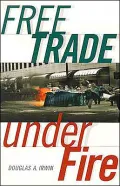
The 1990s began with fears of a "great sucking sound" of jobs lost due to the North American Free Trade Agreement (NAFTA) and ended with opponents of the World Trade Organization (WTO) taking to the streets in the "Battle of Seattle." Why has global trade become so controversial? Does free trade deserve its bad reputation? In Free Trade under Fire, Douglas Irwin sweeps aside the misconceptions that litter the debate over trade and gives the reader a clear understanding of the issues involved. Drawing on an extensive body of economic research, Irwin explains the benefits of trade, not just for corporations but for people and the environment, and illustrates how protectionist policies -- especially arbitrary "fair trade" measures -- damage the economy and fail to save jobs. He then demystifies the WTO and sets the record straight about its controversial rulings on trade and the environment. In a debate where assertions often masquerade as arguments, Irwin's analysis is firmly evidence-based -- rooted in empirical research and relying on specific examples and illustrations. Free Trade under Fire is an essential primer for anyone who wants to understand one of the most burning controversies of our time.Editorials
Richard N. Cooper
Here he provides an entree to recent empirical literature, which largely demonstrates that most of the charges against free trade do not stand up under serious empirical scrutiny. He offers an especially informative chapter on antidumping duties, which have historically been supported in the name of ensuring "fair trade."— Foreign Affairs
Book Details
Published
November 11, 2003
Publisher
Princeton, N.J. : Princeton University Press, c2002
Pages
288
Format
Paperback
ISBN
9780691116341