
Film Production & Direction
Log in to track your reading progress.
Overview
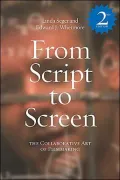
In interviews with over 70 of the top professionals in the film industry, Seger and Whetmore examine each artist's role in making a great script into a great film. Along the way, you will meet the industry's leading writers, directors, producers, actors, editors, composers, and others behind the scenes. From their unique vantage points, personalities as diverse as Oliver Stone, Russell Crowe and Robin Williams reveal the alchemy they use to bring great stories to life.A unique focus on filmmaking, as seen through the eyes of many of film's best-known artists. Among those who granted the authors exclusive interviews for this book are Oliver Stone, Barry Levinson, Ridley Scott, Norman Jewison, Lawrence Kasdan, Robin Williams, Henry Mancini, and John Lithgow. Photos.
Editorials
Publishers Weekly
Script consultant Seger and communications professor Whetmore provide an up-to-date look at the gradual process of moviemaking, using recent screenplays to illustrate their lessons. Brimming with the observations of top-drawer movie mavens like Peter Weir (Witness), David Puttnam (Midnight Express) and the late production designer Ferdinando Scarfiotti (The Last Emperor), the book devotes chapters to each element of making films, from the idea to make the movie (which ideally, says Tootsie writer Larry Gelbart, is "something you absolutely have to do" once the idea enters your mind) to composing the music, which is done when the film is completed and must reflect itsthemes. Along the way, there are nice surprises, like the breakdowns on what an actor's research entails (e.g., Jack Nicholson expounds on taking on the "huge mountain" of Jimmy Hoffa in 1992's Hoffa) and the particulars of special effects, such as the pigeons that don't fly away when they're let out of a cage in A Beautiful Mind. Moreover, the book features a case study of the elements of that Oscar-winning Ron Howard film. Even critics will be interested to learn of the efforts involved in trying to present the complex subject of schizophrenia with intelligence and respect. While the book is aimed at nonveteran film practitioners, it's engrossing enough for any film buff who wants to know more than what Premiere can tell them. (Dec. 15) Copyright 2003 Reed Business Information.Library Journal
Though film scholars tend to lionize directors as the geniuses solely responsible for the creation of films, moviemaking is a collaborative process, demanding the skill and creativity of actors, writers, costume designers, makeup artists, sound technicians, and others. Based on interviews with 60 talented people, some well known (e.g., Oliver Stone, Robin Williams), this book traces the evolution of a film from idea to finished product, with special attention paid to the making of Dead Poets Society (1989). Though this may sound like a picky, dull approach, it isn't. Movie buffs will enjoy the behind-the-scenes stories of the making of films such as Dances with Wolves (1990) and JFK (1991), while film scholars will gain a new understanding of the process of moviemaking and learn to regard the ``auteur'' theory with rightful suspicion. A quick, fun read that's also full of valuable information. Recommended.-- David C. Tucker, DeKalb Cty. P.L., Decatur, Ga.School Library Journal
YA-Using recent motion-picture releases as examples, this book provides a blow-by-blow description of the filmmaking process, including how much control a producer exerts over a project, under what conditions the first scriptwriter should be fired, and how actors' improvisation often enhances a work. What emerges is a portrait of the fluidity of the filmmaking process, and a discussion of its shortcomings as well as its benefits from the viewpoints of the principals involved. This title shows that movies are truly a collaborative art form.Booknews
Captures some of the creative muse involved in filmmaking. Based on some 60 interviews with a variety of filmmaking professionals, the focus here lies chiefly, though not exclusively, with the creation of the film Dead Poets Society. Interviews with actor Robin Williams and director Peter Weir provide personal insight and a concrete sense of how filmmaking is a collaborative effort. In so doing, the authors attain the sought after, but rarely achieved, behind-the-scenes feeling to their work. Annotation c. Book News, Inc., Portland, OR (booknews.com)Book Details
Published
November 1, 2003
Publisher
Lone Eagle Publishing Co
Pages
236
Format
Paperback
ISBN
9781580650540