
General & Miscellaneous Engineering
Available on Bookshop
Write a review
Books.org participates in affiliate programs including Bookshop.org and the Amazon Services LLC Associates Program. We may earn a commission from qualifying purchases made through links on this page, at no additional cost to you.
Log in to track your reading progress.
Overview
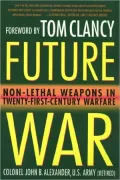
The nature of warfare has changed! Like it or not, terrorism has established a firm foothold worldwide. Economics and environmental issues are inextricably entwined on a global basis and tied directly to national regional security. Although traditional threats remain, new, shadowy, and mercurial adversaries are emerging, and identifying and locating them is difficult. Future War, based on the hard-learned lessons of Bosnia, Haiti, Somalia, Panama, and many other trouble spots, provides part of the solution.
Non-lethal weapons are a pragmatic application of force, not a peace movement. Ranging from old rubber bullets and tear gas to exotic advanced systems that can paralyze a country, they are essential for the preservation of peace and stability. Future War explains exactly how non-lethal electromagnetic and pulsed-power weapons, the laser and tazer, chemical systems, computer viruses, ultrasound and infrasound, and even biological entities will be used to stop enemies. These are the weapons of the future.
Synopsis
A retired U.S. Army Special Forces colonel examines how non-lethal weapons can be used to subdue enemies in our uncertain future. "Adroitly blending fictional action scenarios with real-world geopolitics, Future War captures our imaginations and sweeps us into an innovative new kind of future conflict." —David Morrell, author of Double Image and First Blood The nature of warfare has changed! Like it or not, terrorism has established a firm foothold worldwide. Economics and environmental issues are inextricably entwined on a global basis and tied directly to national regional security. Although traditional threats remain, new, shadowy, and mercurial adversaries are emerging, and identifying and locating them is difficult. Future War, based on the hard-learned lessons of Bosnia, Haiti, Somalia, Panama, and many other trouble spots, provides part of the solution. Non-lethal weapons are a pragmatic application of force, not a peace movement. Ranging from old rubber bullets and tear gas to exotic advanced systems that can paralyze a country, they are essential for the preservation of peace and stability. Future War explains exactly how non-lethal electromagnetic and pulsed-power weapons, the laser and tazer, chemical systems, computer viruses, ultrasound and infrasound, and even biological entities will be used to stop enemies. These are the weapons of the future. "Like it or not, non-lethal weapons will become a dynamic in war and in peacekeeping during the twenty-first century. Alexander gives a comprehensive view of both the technologies and the potential applications. Highly readable." —Clifford Beal, editor of Jane's Defense Weekly "Alexander makes a compelling case about how the new non-lethal technologies are changing the shape of war and the use of force. This is a fascinating account of an important subject." —Joseph Nye, Dean of the John F. Kennedy School of Government, Harvard UniversityBook Details
Published
April 1, 2010
Publisher
St. Martin's Press
Pages
256
ISBN
9781429970105