
American Revolution - Biography, U.S. Politics & Government - 1607 - 1811, Presidents of the United States - Biography, American Revolution - Politics & Government, 19th Century American History - Politics & Government - General & Miscellaneous, Leadershi
Available on Bookshop
Write a review
Books.org participates in affiliate programs including Bookshop.org and the Amazon Services LLC Associates Program. We may earn a commission from qualifying purchases made through links on this page, at no additional cost to you.
Log in to track your reading progress.
Overview
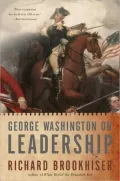
In 1799, at the end of George Washington’s long life and illustrious career, the politician Henry Lee eulogized him as: “First in war, first in peace, and first in the hearts of his countrymen.” Esteemed historian Richard Brookhiser now adds to this list, “First in leadership,” examining the lessons to be learned from our first president, first commander-in-chief, and founding CEO.With wit and skill, Brookhiser expertly anatomizes true leadership with lessons from Washington’s three spectacularly successful careers as an executive: general, president, and tycoon. In every area of endeavor, Washington maximized his strengths and overcame his flaws. Brookhiser shows how one man’s struggles and successes two centuries ago can serve as a model—and an inspiration—for leaders today.
Editorials
Kirkus Reviews
From a journalist and historian specializing in the lives of the Founders, lessons in leadership drawn from the plantation, military and political career of George Washington. Washington's colorful contemporary, Gouverneur Morris, disparaged books on leadership, dismissing them as merely "utopian," a skepticism National Review senior editor Brookhiser (What Would the Founders Do?: Our Questions, Their Answers, 2006, etc.) appears to share. But the author forges ahead, addressing his theme in topical fashion, distilling a series of maxims from a variety of problems and situations Washington handled. The vignettes are always interesting: Washington insisting on the importance of proper latrines and inoculations to ensure the army's health, diversifying crops at Mount Vernon, finessing the Continental Congress, putting down mutiny within the army and later rebellion within the young country, keeping the peace between Hamilton and Jefferson, dealing with the betrayal of Benedict Arnold. At the same time the "lessons" drawn from these and many other slices of Washington's life are problematic, if only because they are so often contradictory. Washington observed lines of authority (deferring to the advice and consent of the Senate), except when he circumvented them (seeking funding for the army). He was patient (settling on a strategy for the war), except when he was bold (seizing the moment at Yorktown). He was a hands-on manager (of his plantation), unless he was wisely delegating (speeches to Madison, artillery chores to Knox or matters of high finance to Hamilton). He made use of friends (Lafayette) until he broke with them (Knox). By the end of Brookhiser's colloquial, good-humoredanalysis, we're persuaded that, while no leader in American history may be more worthy of emulation, the mature Washington's signal virtue was his consistently sound, often spectacularly wise judgment, a faculty honed throughout a lifetime presiding over highly important matters and one not easily imitated. Apparently Gouverneur Morris was correct. Unexceptional wisdom breezily packaged. Agent: Michael Carlisle/InkWell ManagementBook Details
Published
April 13, 2009
Publisher
Basic Books
Pages
288
Format
Paperback
ISBN
9780465003037